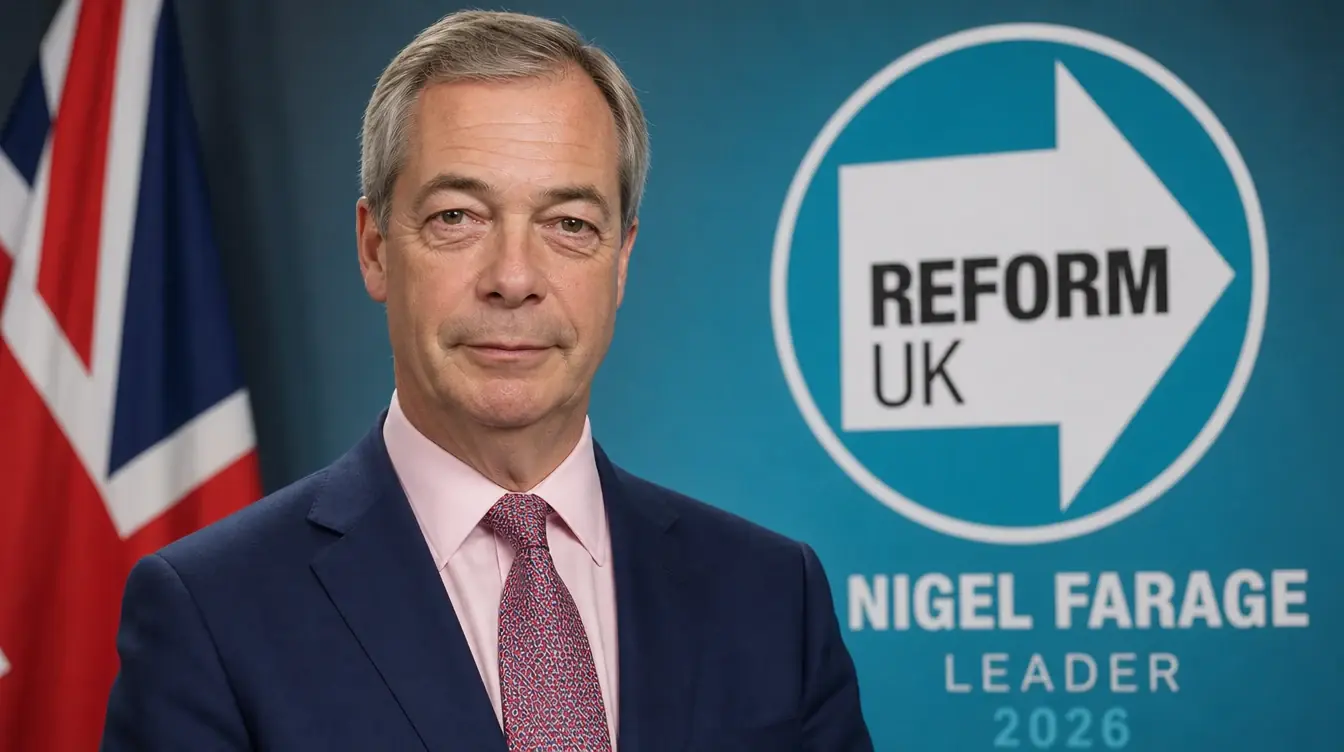
There is something genuinely strange happening in Clacton. When Nigel Farage resigned his seat to trigger a by-election, the obvious assumption was that every rival party would leap at the chance to test his standing directly. Instead, Labour, the Conservatives, the Liberal Democrats and even Restore Britain — the breakaway party founded by former Reform figures — have all declined to field a candidate, leaving Farage facing only minor and novelty candidates, most prominently the perennial joke candidate Count Binface. LBC’s panel discussion, hosted by Iain Dale, put the resulting contradiction under real pressure, and the exchange is worth working through in detail because it exposes a genuine strategic dilemma rather than a simple case of cowardice.
The panel — featuring Liberal Democrat MP Lisa Smart, commentator Benedict Spence, columnist Justine Greening and broadcaster Ian Williams — split roughly down the middle, and the disagreement tracks a genuinely difficult question that goes well beyond Clacton: when does refusing to engage with a political opponent amount to sound strategy, and when does it become a self-inflicted wound?
The Case for Boycotting: “Don’t Reward a Tantrum”
Lisa Smart put the boycotting parties’ case in its strongest form: this is “attention-seeking behaviour,” and “when toddlers misbehave, you do not reward them by giving them lots of attention.” Her deeper point was about the underlying pattern — Clacton follows the earlier resignation of Josh Simons as MP for Makerfield, engineered specifically to let Andy Burnham contest that seat on his path to the Labour leadership. Two forced by-elections inside a matter of weeks, in her telling, represent a troubling trend of MPs treating parliamentary seats as personal instruments rather than public trusts, and legitimising the tactic by contesting it properly risks normalising it further.
The Case Against: “It Doesn’t Present Very Well”
Benedict Spence made the opposing case with real force. Whatever anyone thinks of Farage’s motives, he argued, refusing to contest a real, functioning by-election sends the message that the Conservatives in particular — who talk constantly about being “resurgent” and preparing to challenge Reform UK nationally — are not actually willing to fight Reform on its own turf when it matters. He pointed to a pattern of Conservative candidates already losing their deposits in recent by-elections in Reform-leaning seats, arguing that a party genuinely on the rise does not keep ceding contested ground without a fight, and that telling the voters of Clacton they simply do not get a choice this time is unlikely to be received well locally, whatever the tactical logic in London.
Justine Greening went further, drawing a direct comparison to her own experience defending Putney four times as a Conservative MP even when polling made her win look near-certain. Her argument: democratic accountability does not become optional just because an outcome looks predictable, and refusing to test that assumption at the ballot box, while continuing to publicly question Farage’s fitness for office, is simply incoherent.
The Awkward Middle Ground
Perhaps the most revealing moment came when the panel turned to what happens if the parliamentary standards investigation eventually finds against Farage. Because he cannot simply resign as an MP under parliamentary procedure — he must be appointed to a token crown position, a decision that ultimately rests with the government — there is a live possibility that ministers could delay finalising his departure specifically to avoid holding a second, more genuinely contested by-election once more damaging findings become public. If that happens, several panellists agreed, the parties currently sitting this contest out would find themselves with considerably less room to complain that Farage dodged scrutiny, having declined their own opportunity to test him at the ballot box when they had the chance.
What This Means Going Forward
Clacton is shaping up as a genuinely unusual electoral event: a by-election almost certain to return the same MP, contested by nobody with a realistic chance of beating him, that will nonetheless generate weeks of national coverage. For Reform UK, an uncontested-in-practice win removes almost all electoral risk while letting Farage frame himself as vindicated by the voters regardless of what the standards commissioner eventually rules. For everyone else, the boycott buys short-term safety at the cost of a longer-term argument about who is actually willing to fight Reform where it currently leads.