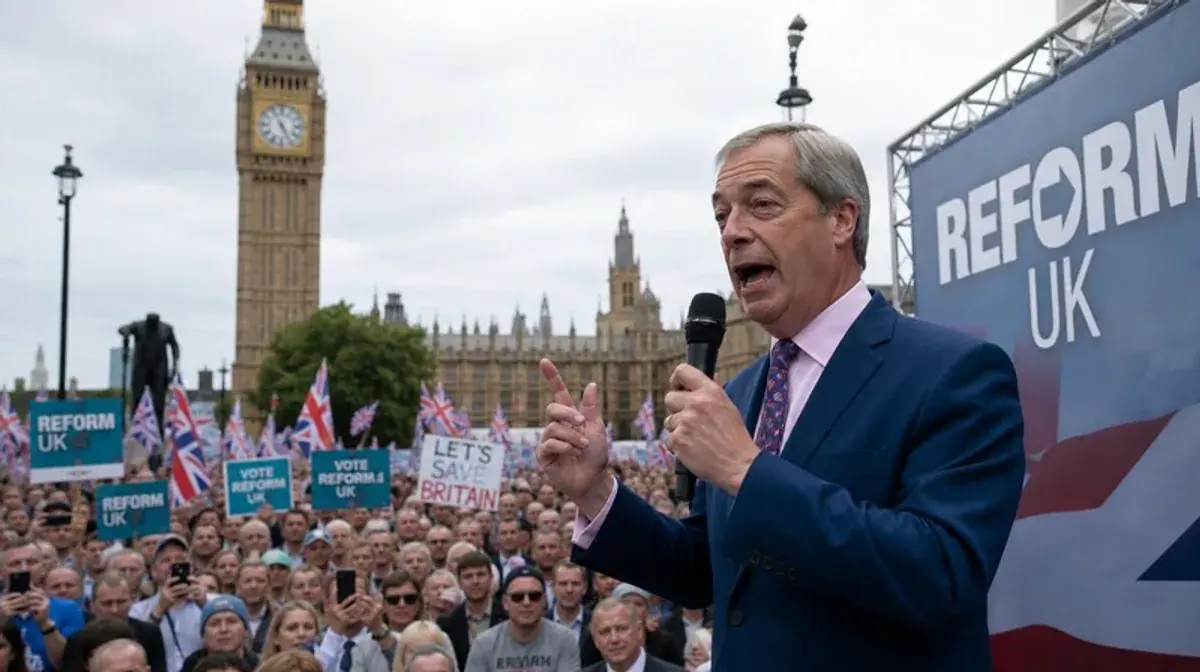
Reform UK entered the 2024 Parliament with five MPs. By the end of 2025, it had eight. Three parliamentary by-elections — in seats spanning Labour and Conservative territory — confirmed what the national polls had been suggesting: that Reform can convert polling intentions into actual votes when the conditions are right. The question is whether those conditions can be replicated nationally.
The Three By-Election Victories: A Pattern Emerges
The three Reform by-election wins in 2025 came from different political contexts. One seat had been held by Labour with a majority of around 4,500, lost following the sitting MP’s resignation over a constituency matter. One was a Conservative-held seat where the MP had been elevated to the Lords. The third was a Labour seat in the East Midlands where Reform had come second in 2024 and the by-election was triggered by an MP’s death in office.
In each case, Reform won with vote shares between 38% and 44% — significantly above its national average at the time of around 24–26%. The pattern is consistent with the “by-election premium” enjoyed by insurgent parties in Britain: lower overall turnout, greater willingness to cast a protest vote, and concentrated media attention all boost the insurgent at the expense of the governing party. Labour has since used the same mechanism against Reform’s own advantage: Andy Burnham’s landslide Makerfield by-election win in a seat vacated specifically to let him contest it became the moment that made Keir Starmer’s departure inevitable.
What By-Elections Actually Tell Us
The evidentiary value of by-elections for predicting general elections is real but limited. By-elections are conducted with lower turnout — typically 30–45% versus 60% nationally — and voters who stay home are disproportionately those who support the governing party. The governing party almost always performs worse in by-elections than general elections, a historical regularity so robust it is sometimes called the “mid-term by-election swing.”
Reform’s wins are nonetheless significant because they demonstrate the party’s ability to mobilise its vote efficiently in target seats. This is the key bottleneck for converting the national 28% polling lead into seats under first-past-the-post. Parties that poll well nationally but cannot identify and turn out their vote efficiently in specific constituencies fail at the moment of decision. The by-elections suggest Reform’s local organisation has improved significantly since 2024.
The Parliamentary Impact: Eight MPs vs a Political Movement
Eight MPs give Reform a somewhat louder voice in Parliament but do not change the legislative arithmetic. The party cannot block government legislation, win votes, or force debates except through the procedural opportunities available to any group of opposition MPs. What the expanded parliamentary presence does provide is media exposure, the legitimacy of being seen as a genuine parliamentary force, and — crucially — a visible demonstration to potential donors and candidates that Reform is a real party, not a polling phenomenon.
Candidate recruitment is the operational challenge Reform now faces. Going from eight MPs to the 100+ needed for significant parliamentary influence requires finding credible candidates in dozens of seats, training them, and providing the local infrastructure to run effective campaigns. The by-election wins have helped recruitment: the party reports significantly more high-quality candidate applications following each victory, as the calculus of standing for Reform shifts from quixotic gesture to plausible career move.
Labour’s Response: Panic or Strategic Recalibration?
Each Reform by-election win generated a Westminster briefing cycle about Labour’s strategic response. Government sources consistently insisted the losses were by-election specific rather than harbingers of collapse. At the same time, the internal polling evidence visible in subsequent policy decisions suggests genuine alarm about working-class voter attrition, particularly in the East Midlands and Yorkshire seats Labour needs to hold in 2029.
The political logic Labour faces is difficult. The voters moving to Reform are primarily motivated by immigration, the cost of living, and a sense of not being listened to. Labour cannot match Reform on immigration without alienating its metropolitan and graduate voter base. Addressing the cost of living requires either spending that conflicts with fiscal rules or structural economic reforms that take years to deliver. The “nothing works fast enough for the pace of the political threat” problem is real and not easily solvable through communications strategy alone.
The Road to 2029: Can Reform Build on the Momentum?
The MRP models currently projecting Reform winning 80–100 seats in 2029 are based on current polling levels and assumptions about vote efficiency. Each additional piece of evidence — by-election wins, local election gains, improved candidate recruitment — strengthens the case that Reform’s vote can be concentrated effectively in the right places. The party’s target seat list, believed to run to 150+ constituencies, now has real evidence of performance in it.
Whether Reform can go beyond 80–100 seats to the 180–200 needed for a realistic shot at majority government is a different and much harder question. It would require either the Conservatives collapsing to below 15% nationally — releasing their vote into Reform’s column in the right seats — or Reform making unprecedented inroads into Labour territory beyond the marginals it is currently targeting. The by-elections suggest the former is more plausible than the latter, but neither is certain. The next three years will determine whether 2025’s three wins were the beginning of a genuine political realignment or a high-water mark that retreated when the economy improved.