Source: YouGov/Ipsos tracker composite, May 2026. GB adults.
Approval Trend: July 2024 – May 2026
▼ Steady decline driven by immigrationNet approval = approve % minus disapprove %. Fell sharply after Channel crossings data and public frustration with pace of immigration reduction. Source: YouGov, Ipsos, Survation composite.
Monthly Approval Data
| Month | Approve | Disapprove | Net | Change |
|---|---|---|---|---|
| Jul 2024 | 36% | 40% | −4 | — |
| Sep 2024 | 34% | 44% | −10 | −6 |
| Nov 2024 | 33% | 46% | −13 | −3 |
| Jan 2025 | 33% | 48% | −15 | −2 |
| Mar 2025 | 32% | 50% | −18 | −3 |
| Jul 2025 | 32% | 51% | −19 | −1 |
| Jan 2026 | 31% | 52% | −21 | −2 |
| May 2026 | 31% | 53% | −22 | −1 |
Immigration Trust: Cooper vs. the Parties
Reform UK leads by +13pts over LabourSource: composite YouGov/Ipsos/Survation, May 2026. “Which party do you trust most to handle immigration?” Immigration issue tracker →
Net Migration Under Cooper’s Watch
Source: ONS net migration estimates. Annual figures to September each year. The 2023 peak of ~740,000 was under the previous Conservative government. Net migration has fallen sharply but remains well above any level previously treated as acceptable by any mainstream party.
Key Home Office Polling Numbers
Approval by Demographic Group
| Group | Approve | Disapprove | Net |
|---|---|---|---|
| 18–24 | 38% | 42% | −4 |
| 25–49 | 33% | 50% | −17 |
| 50–64 | 28% | 57% | −29 |
| 65+ | 24% | 62% | −38 |
| Men | 28% | 56% | −28 |
| Women | 34% | 50% | −16 |
| Degree-educated | 41% | 42% | −1 |
| No degree | 25% | 59% | −34 |
| London | 43% | 39% | +4 |
| North of England | 26% | 58% | −32 |
| Midlands | 27% | 57% | −30 |
Source: YouGov/Ipsos demographic crosstabs, May 2026. Cooper polls positively only in London, where attitudes to immigration are markedly more favourable than in the rest of England.
Political Background & Context
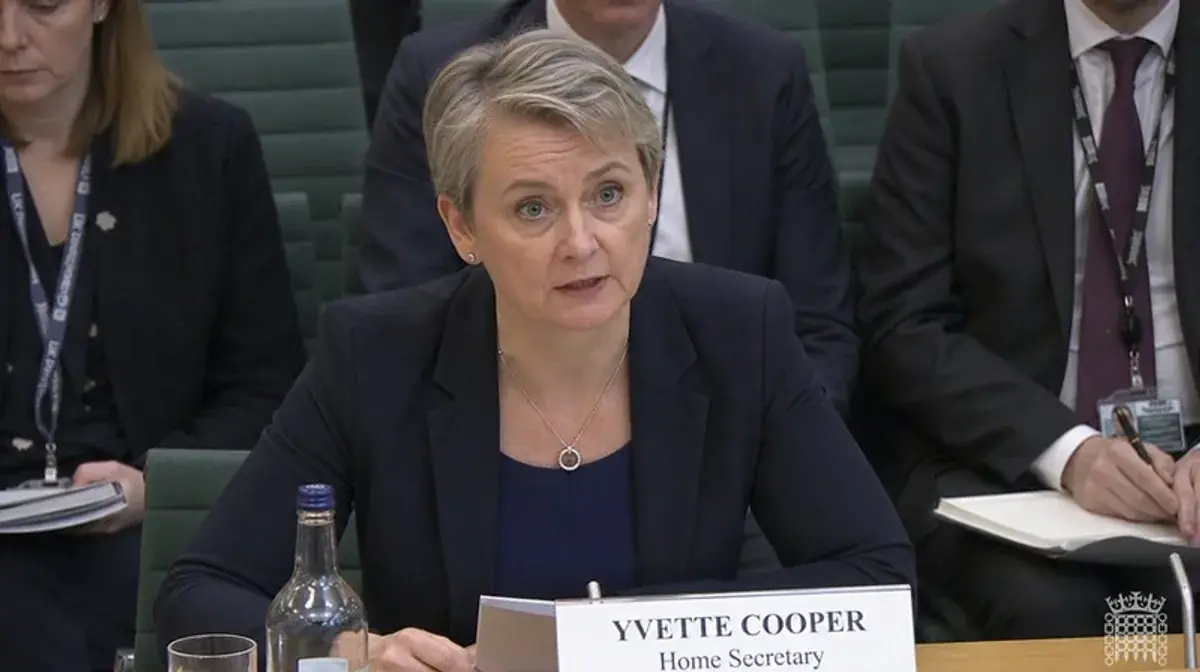
Yvette Cooper became Home Secretary in July 2024, bringing nine years of experience as Shadow Home Secretary to the role. She previously served as Chief Secretary to the Treasury under Gordon Brown during the 2008–2010 financial crisis — one of the most demanding economic periods in modern British history.
Cooper’s Home Office agenda has centred on three priorities: reducing small boat Channel crossings, reforming the Metropolitan Police following the Casey Review, and processing the backlog of asylum claims inherited from the Conservative government.
On immigration, Cooper has pursued a more technocratic approach than her Conservative predecessors — abolishing the Rwanda policy, negotiating returns agreements with EU partners, and investing in asylum claim processing capacity. Net migration has fallen significantly from its 2023 peak but remains above 350,000, well above the level that voters identify as acceptable. This gap between measured progress and public expectation is the central political challenge she faces.
On policing, Cooper has committed to recruiting 13,000 additional neighbourhood police officers, a flagship Labour pledge. Progress has been slow, with recruitment falling short of targets in many forces. Public trust in the police at 34% — the lowest in the Ipsos trust tracker series — is an acute problem. The Metropolitan Police reform process, following the Casey Review, has produced visible changes in senior leadership but cultural transformation is assessed by inspectors as incomplete.
Cooper is widely regarded within Labour as a competent and experienced minister, but the structural difficulty of her brief — leading the two most politically toxic issue areas (immigration and policing) in the most demanding political period for any Labour government in decades — makes sustained positive polling essentially impossible given current public attitudes.
Home Office Issue Trust: Cooper vs. Rivals
Source: YouGov/Ipsos composite, May 2026. % who trust each party most on each issue.
Frequently Asked Questions
What is Yvette Cooper’s current approval rating?
As of September 2026, Yvette Cooper has a net approval rating of -22%, with 31% approving and 53% disapproving. This represents a fall of 18 points from her starting position in July 2024. She is the third-least-popular senior Cabinet minister after Prime Minister Keir Starmer (-44) and Chancellor Rachel Reeves (-28).
How do voters rate Yvette Cooper on immigration?
Only 21% of UK voters trust Yvette Cooper and Labour most on immigration, versus 34% who trust Reform UK and 19% who trust the Conservatives. Reform UK’s 13-point lead on immigration trust is one of the largest single-issue advantages of any party in UK polling. The immigration issue tracker shows 76% of voters saying immigration levels are too high.
Has net migration fallen under Yvette Cooper?
Net migration has fallen from approximately 740,000 in the year to June 2023 to around 380,000 in the 12 months to September 2025 — a fall of around 360,000. However, this figure includes the lagged effect of Conservative-era policies, particularly the graduate visa route changes made before the 2024 election. Labour has also restricted international student dependant visas and tightened care worker visas. The 380,000 level remains historically very high.
What is Yvette Cooper’s background?
Yvette Cooper is the Labour MP for Pontefract, Castleford and Knottingley, first elected in 1997. She served as Chief Secretary to the Treasury (2008–10) under Gordon Brown and as Shadow Home Secretary from 2015 to 2021 and again from 2022 to 2024 — the longest-serving shadow holder of that brief in modern parliamentary history. She became Home Secretary in July 2024 when Labour won the general election.
What is Yvette Cooper’s record on police reform?
Cooper committed to recruiting 13,000 additional neighbourhood police officers and has overseen Metropolitan Police reforms following the Casey Review. Public trust in the police has fallen to 34% — a record low in the Ipsos tracker series — despite senior leadership changes. Progress on neighbourhood policing recruitment has been slower than planned. Crime and policing polling →
What are the main Home Office challenges for Yvette Cooper?
Cooper faces three structural challenges: Channel crossings remain above 30,000 per year despite a new UK-EU returns agreement; net migration at 380,000 is historically very high; and police trust stands at 34%, a record low. Reform UK’s 13-point lead on immigration trust (34% vs Labour’s 21%) means the political environment is especially hostile. Her approval is +4 in London but −32 in the North of England. Immigration polling →
Related Polling Pages
Video: Further Analysis
Video: Leader approval ratings for all major UK politicians in 2026 — how the public views Starmer, Reeves, Cooper, Farage, and Badenoch, and what the numbers mean for the 2029 general election.