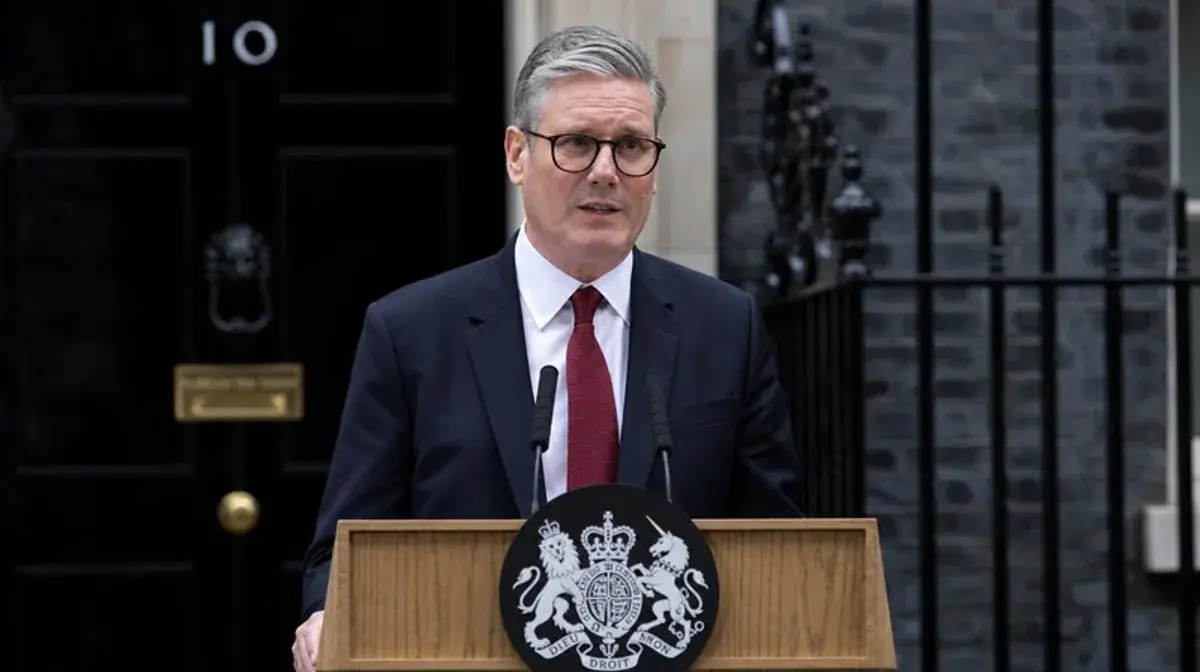
Fewer than three weeks before Keir Starmer formally hands Downing Street to Labour’s incoming leader, the strategist who built his path to power sat down for one of the most unguarded interviews of the entire Starmer premiership. Morgan McSweeney, the chief of staff who is widely credited with engineering Labour’s 2024 landslide and who resigned earlier this year over the fallout from the Peter Mandelson ambassadorship affair, spoke to BBC Politics about what went right, what went badly wrong, and why a government elected with one of the largest majorities in modern British history collapsed in barely twenty-four months.
This is not a routine post-mortem. McSweeney is the man Westminster insiders describe as having personally identified Starmer as Labour’s best chance of removing Jeremy Corbyn-era politics from the party, driven the internal battle against antisemitism, and built the electoral coalition that delivered the 2024 result. His willingness to speak candidly — while the removal vans have not yet arrived at Number 10 — makes this interview one of the more important documents in understanding both the rise and fall of Starmerism, and it is essential context for anyone trying to understand where Labour goes next under an incoming Andy Burnham government.
“We Didn’t Prepare for What Kind of War We’d Be In”
Asked for a one-line explanation of where it went wrong, McSweeney did not reach for an excuse. His honesty was, in places, startling. “I’m still processing it all, to be honest with you,” he said, adding that he had struggled to watch all of Starmer’s resignation press conference. His central diagnosis was that Labour spent so long in opposition simply trying to persuade itself that winning was even possible — a battle that consumed 2020 through 2023 — that it left almost no time to build a serious theory of how to actually govern. “We didn’t prepare enough for what kind of war we were going to be in,” he said, arguing that modern politics moves faster than the institutions that are supposed to run the country, leaving almost no room for a new government to find its feet before the public’s patience runs out.
He was clear that this was not a matter of voters being impatient in the abstract. “It’s not patience they lack, it’s time,” he argued — people had been promised change for years and simply had not seen it delivered quickly enough to believe in it again. That, in McSweeney’s account, is the single biggest structural problem facing any incoming government in the current political climate, Labour or otherwise, and it will be the first test facing Labour’s next leader.
The Winter Fuel Cut: “It Was a Mistake”
Pressed directly on individual decisions, McSweeney did not defend the early cut to winter fuel payments for pensioners — a decision that is now widely seen as one of the defining errors of the government’s first year. “I think it was a mistake,” he said flatly, when asked whether Number 10 should simply have told the Treasury no. He revealed that the choice had been presented internally as one of very few options available at a moment when officials were warning about a market reaction to an unfunded £22 billion in-year overspend, and that, in his account, nobody in the room pushed back hard enough at the time. It is a rare admission from someone whose entire reputation was built on tactical discipline: that on one of the most consequential early calls of the government, the strategy machine simply did not do its job.
He was equally candid about the government’s tax strategy. Labour’s 2024 manifesto ruled out rises to income tax, national insurance and VAT — a pledge McSweeney effectively conceded had tied the government’s hands in ways that made the subsequent budget arithmetic far harder than it needed to be. Asked whether a more honest offer — for instance, a single penny increase on income tax in return for a clear NHS investment promise — might have both won the election and left more room to govern, he did not rule it out, arguing only that ruling out a VAT rise specifically had been unavoidable in the middle of a cost-of-living crisis.
On Handling Trump, and the Political Cost of Not Being Performative
Some of the interview’s lighter moments came when McSweeney described the first phone call between Starmer and Donald Trump, in which the president reportedly launched into an extended, entirely unprompted riff about windmills killing birds, foxes eating the dead birds, and the foxes consequently growing too fat to be recognisable — delivered, McSweeney says, with officials in the room struggling to keep a straight face while Starmer held his composure throughout.
Beneath the anecdote sits a more serious point. McSweeney argued that Starmer paid a real political price for appearing, in the public’s eyes, to accommodate Trump rather than confront him — even as, behind the scenes, he was willing to push back on specific issues, from comments about British soldiers in Northern Ireland to the war in Ukraine. The public, McSweeney suggested, wanted a defiant “this is Britain” moment, and Starmer’s refusal to perform politics in that way — even when it would have been popular — is, in his telling, both admirable and one of the reasons the government never built the kind of public folk-hero moment that might have bought it more time.
What This Means Going Forward
McSweeney’s account matters well beyond the history books. As Labour transitions to a new leader widely expected to be Andy Burnham, every one of the failures McSweeney identifies — underestimating the pace required to deliver visible change, tying fiscal hands with manifesto pledges that left little room for honest trade-offs, and struggling to build a public narrative strong enough to compete with Reform UK’s — becomes a live question for the incoming government rather than a historical curiosity. Burnham has already signalled, in his own public remarks, that he intends to do things differently: more devolved power, a more inclusive cabinet, and a more explicit break with what he has called the “drip, drip” incrementalism of the Starmer years.
Whether that amounts to a genuine change in direction or simply a change in tone will become clear over the coming months. What McSweeney’s interview makes unambiguous is that Labour’s leadership itself now accepts, on the record, that the collapse in the party’s voting intention since 2024 was not simply bad luck or an unfair press — it was, in large part, a failure of preparation for government that started well before a single vote was cast.