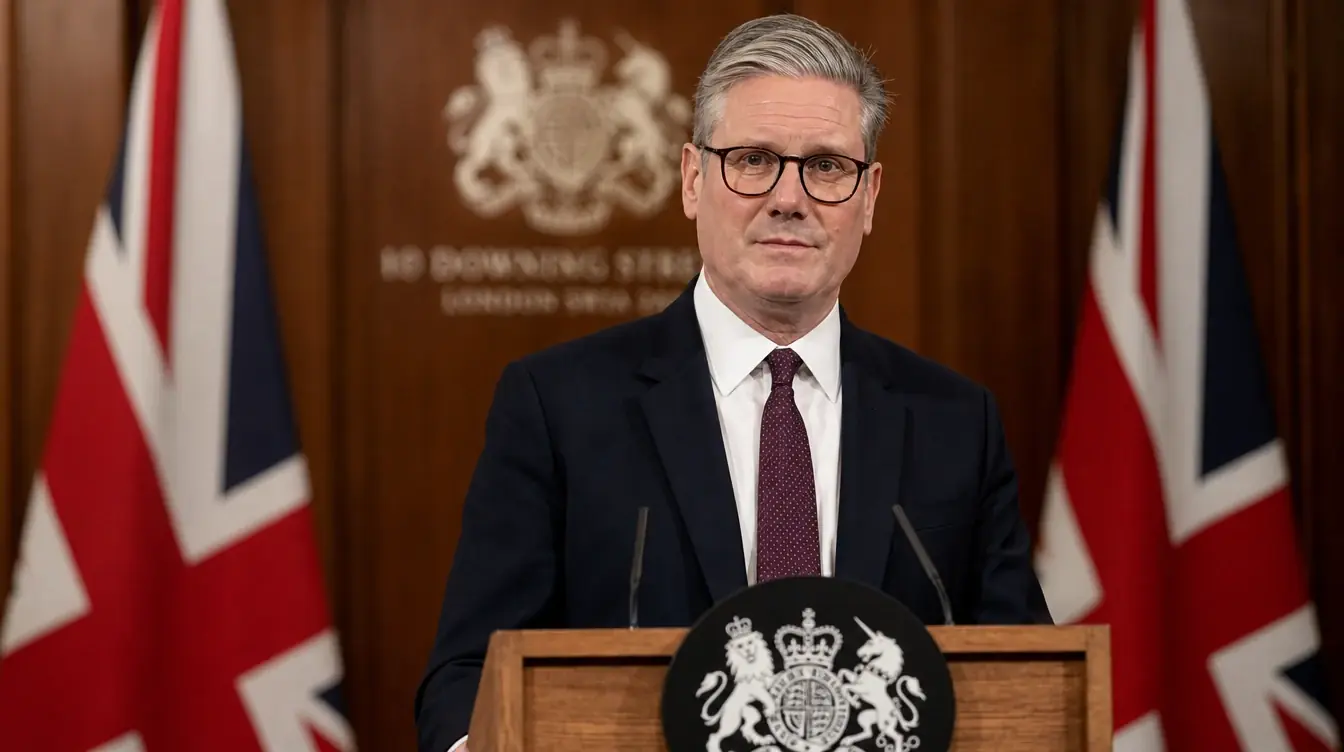
When Keir Starmer entered Downing Street in July 2024 with a majority of 174, his personal approval rating stood at approximately −3% — low for a new prime minister but not alarming. By June 2026, that figure has deteriorated to −44.8%, making him, paradoxically, the least popular of the three main party leaders despite holding the largest parliamentary majority in decades. The leader approval tracker tells a story of continuous decline with almost no reversal.
Reading the Approval Data: What −44% Means
Net approval is the percentage of respondents who approve of a leader’s performance minus those who disapprove. At −44.8%, roughly 19% of voters approve of Starmer’s performance as Prime Minister and 63.8% disapprove. The remaining ~17% say they don’t know. Among Labour’s own 2024 voters, approval stands at 41% — meaning nearly six in ten of the people who voted Labour in 2024 now disapprove of the man they put into Downing Street.
For comparative context: Tony Blair’s lowest net approval in the YouGov era was approximately −17%, reached in 2007. Gordon Brown fell to −40% but during a global financial crisis after years in office. Theresa May reached −24% during the Brexit deadlock. David Cameron’s worst figure was around −17%. Starmer is at −44% less than two years into office, with no comparable crisis on the same scale as 2008 or 2019’s constitutional deadlock.
The Trajectory: Month by Month
The approval decline can be mapped across five phases. Phase one (July–August 2024): Starmer enters office at −3%. There is no honeymoon effect but no immediate collapse either. Voters are taking a wait-and-see position. Phase two (August–November 2024): The winter fuel payment cut, followed by the autumn Budget, drives approval to −18%. The employer NI rise and agricultural inheritance tax change alienate groups not previously hostile to Labour.
Phase three (December 2024–April 2025): The immigration statistics confirming no material reduction in net migration from 728,000 per year push approval to −24%. Voters who had specifically cited immigration as a reason for cautiously backing Labour or giving it benefit of the doubt begin abandoning the party and its leader. Phase four (May–October 2025): The donations controversy and a series of ministerial gift scandals drive approval to −30%. The issue reinforces a narrative of a two-tier government at odds with its own rhetoric about standards.
Phase five (November 2025–June 2026): NHS waiting lists remain above 7 million. Housing starts are below the government’s own targets. Economic growth is anaemic at 0.6% annually. There is no single dramatic event, but the compounding weight of unfulfilled promises has pushed approval to its current −44.8% — (19% approve, 63.8% disapprove).
How Starmer Compares to Badenoch and Farage
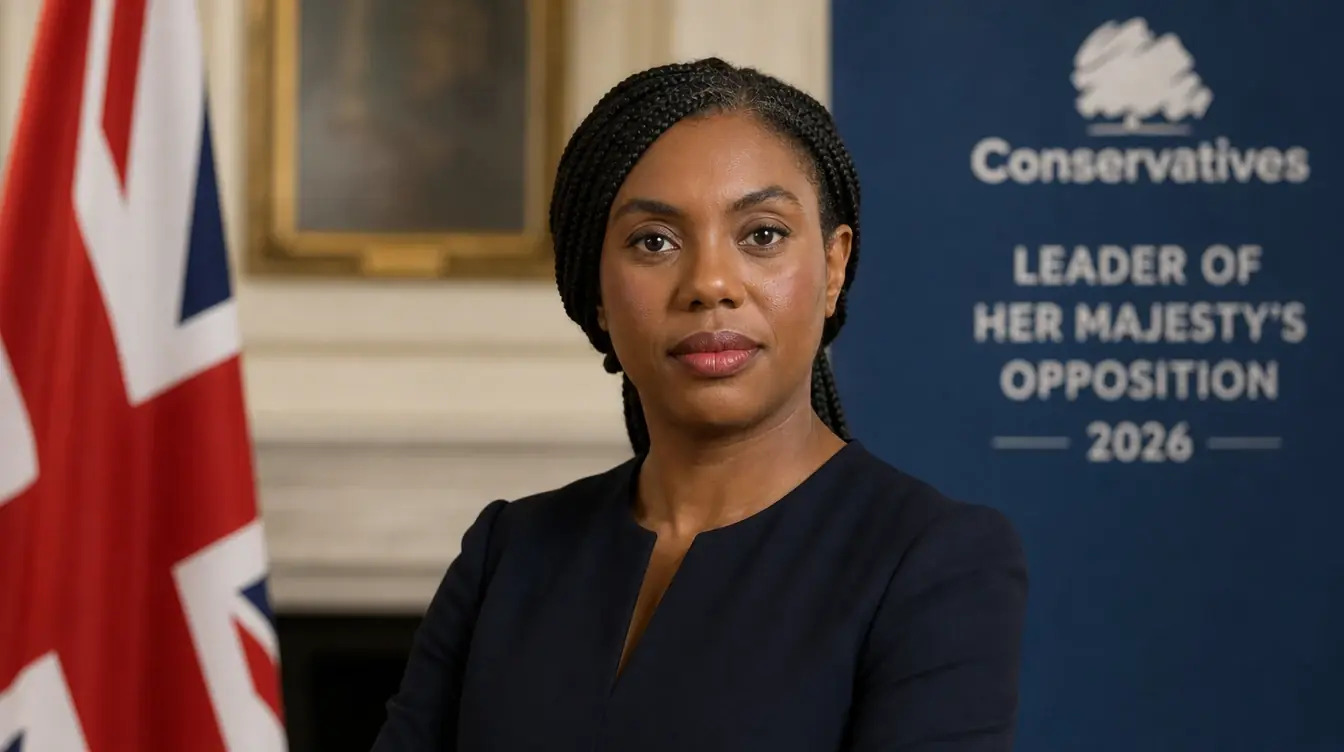
The comparison with other party leaders is striking. Kemi Badenoch, who took over a Conservative Party that had just suffered its worst election defeat in over a century, sits at approximately −15% in June 2026. Her ratings have actually improved from −22% when she became leader in November 2024, suggesting a partial base consolidation among remaining Tory voters. Nigel Farage sits at −13.6%, which reflects near-universal approval among Reform’s own voters (+78%) but strong disapproval among everyone else.
The remarkable fact is that Starmer — a sitting Prime Minister with a majority of 174 — is about 29 points worse than the leader of a party that just lost 251 seats. The gap illustrates how dramatically governing has damaged Starmer’s personal standing. In opposition, Starmer was seen as competent, forensic, and serious. In government, those same qualities have not translated into public confidence, and the decisions that drove his popularity down have defined his public image.
The Policy Decisions That Drove the Decline
Three specific policy decisions have been the most significant drivers of Starmer’s personal approval decline. First, the winter fuel payment restriction in August 2024. Ipsos polling from October 2024 showed 62% of the public opposed the change, including 49% of Labour’s own 2024 voters. The policy was economically defensible but politically self-inflicted, and the government’s communication of it was widely regarded as inadequate.
Second, the employer National Insurance rise. While the government argued this was necessary to fund public services, polling consistently showed that voters associated it with higher prices and slower hiring. Surveys asking whether the Budget made voters better or worse off showed 54% saying worse off against 18% better off — ratios rarely seen in this direction from a new government’s first Budget.
Third, and most damaging to Starmer’s personal brand, were the gifts controversies of summer 2025. The Prime Minister had built his entire political identity on a contrast with Boris Johnson on integrity and standards. The disclosure of glasses, clothing, and hospitality accepted without proper declaration undermined this positioning entirely. Among voters who had cited “honesty” as a reason for voting Labour in 2024, disapproval of Starmer personally jumped 19 points in three months.
Demographics: Who Disapproves and Why
Starmer’s approval deficit runs across almost all demographic groups, but with different intensities. Among over-65s, driven largely by the winter fuel cut, his disapproval runs at 72%. Among working-class voters in the North and Midlands, it is 69%. Among degree-educated voters under 35 — once a core of Labour’s 2024 coalition — it has reached 58%, with many citing climate commitments not met, the Gaza conflict, and housing policy.
The only demographic where Starmer retains above-50% approval is among Labour’s core vote loyalists and among public sector professionals. This is an insufficient base for national popularity and underlines why the party’s voting intention numbers have fallen in parallel with his personal approval.
Leadership Challenge Prospects
As of September 2026, no serious public leadership challenge has emerged. Labour MPs are constrained by the party constitution, the lack of an obvious successor, and the fact that the 2029 election still lies four years away. The calculation among most MPs is that the damage of a visible leadership dispute outweighs the uncertain benefits of a new leader who inherits the same structural problems.
However, internal pressure is growing. A YouGov poll of Labour members conducted in April 2026 found 41% saying Starmer should resign or stand down before the next election. A group of backbench MPs has privately called for a change in economic direction if polling does not show improvement by autumn 2026. The threshold for a challenge to become public is falling.
Frequently Asked Questions
What is Keir Starmer’s approval rating in 2026?
As of September 2026, Keir Starmer has a net approval rating of approximately −44.8%, meaning around 44.8 percentage points more voters disapprove than approve. Approximately 19% approve and 63.8% disapprove of his performance as Prime Minister.
When did Starmer’s approval start falling?
Approval began falling almost immediately after taking office in July 2024. The winter fuel payment cut in August 2024 was the first major trigger, followed by the autumn Budget. By early 2025 he was at −22%, and the decline continued through 2025 and into 2026.
How does Starmer compare to Badenoch and Farage in approval?
In June 2026, Starmer is at −44.8%, Kemi Badenoch at around −15%, and Nigel Farage at −15%. Starmer is by far the least popular of all major party leaders despite being Prime Minister.
Is a Starmer leadership challenge likely?
As of September 2026, no serious public challenge has emerged. Labour MPs are constrained by party rules and the long horizon to 2029. However, internal pressure is growing, and if polling does not recover by 2027 the pressure for change will intensify significantly.