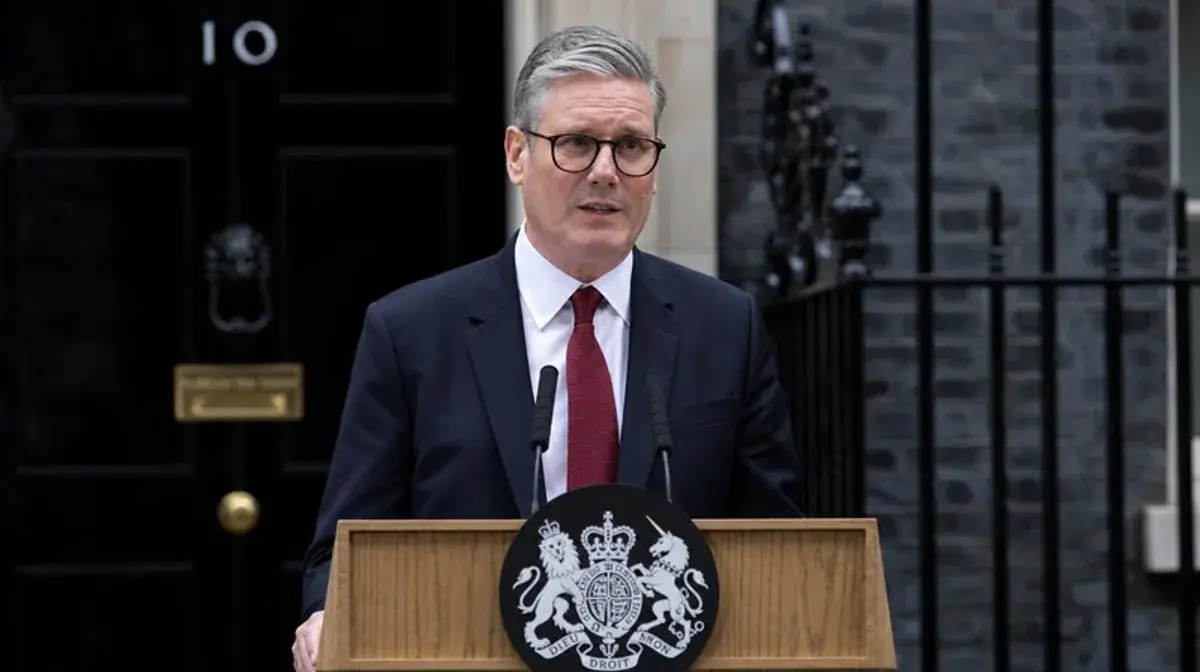
Keir Starmer won the largest parliamentary majority since 1997 in July 2024, taking 412 seats on 33.7% of the vote. Fourteen months later, Labour is polling at 18% and Starmer’s personal approval ratings are deeply negative. Understanding what happened — and whether it can be reversed — is the central question in British politics heading into 2026.
The Polling Trajectory: From Landslide to Crisis
Labour’s polling decline followed a distinctive pattern. The party averaged 34–36% in polls immediately after the July 2024 election, buoyed by a honeymoon period. By October 2024, that had slipped to 28–30% as the winter fuel allowance cut — removing the payment from approximately 10 million pensioners not on pension credit — generated intense political controversy.
The slide continued through autumn and winter 2024–25. By January 2025, Labour was averaging 24–26%. The budget in October 2024, which raised employer National Insurance contributions, proved deeply unpopular with small businesses and was blamed for subsequent job losses. The NHS waiting list, which Labour had promised to reduce dramatically, was still growing in early 2025.
The most dramatic fall came in the summer and autumn of 2025, when net migration figures showed barely any reduction from record levels under the Conservatives. By January 2026, Labour had fallen to 20%, and by April 2026, to 18% — six points below its 2024 election result. The voting intention tracker shows Labour at 18% in the most recent aggregate. Spring 2026 brought a fresh blow to Starmer’s standing when the Peter Mandelson ambassadorship affair raised serious questions about his judgment and oversight, an episode commentators would later point to as an early sign the premiership was becoming unrecoverable.
Starmer’s Personal Ratings: A More Complex Picture
Starmer’s personal ratings tell a more nuanced story. His net approval — the percentage approving minus the percentage disapproving — reached -28% in January 2026, among the worst ratings for a sitting prime minister in the polling era. By May 2026, this had recovered to approximately -18%. Still deeply negative, but the direction of travel has improved.
The improvement in Starmer’s personal ratings, even as party ratings remain depressed, suggests voters distinguish between their view of Starmer as a person and their view of his government’s performance. His handling of several international crises received broadly positive coverage and contributed to the personal rating improvement.
Comparatively, Starmer remains ahead of Kemi Badenoch on most personal metrics. On “best Prime Minister”, Starmer leads Badenoch by 22 points to 14% in May 2026 polling, with Farage on 18%. Leading on that metric while trailing in voting intention illustrates Labour’s unusual position: voters who think Starmer is the best available PM are nonetheless telling pollsters they will vote for someone else. That gap between record and perception is exactly what his own former chief of staff later admitted the government never resolved.
Why Voters Left Labour: The Issue-by-Issue Breakdown
Detailed issue-tracking data reveals the specific policy decisions that cost Labour the most support. The winter fuel cut is consistently cited as the biggest single factor in polls asking Labour 2024 voters why they no longer intend to vote Labour. Among over-65s who voted Labour in 2024, 44% say the winter fuel cut has made them reconsider their vote.
On the economy, 54% of voters say the country’s economic situation is getting worse under Labour, versus 18% who say it is improving. On the NHS, 49% say the health service is getting worse, versus 24% improving. Some NHS metrics have improved marginally, but the narrative of decline has been more powerful than the modest improvements in the data.
On immigration, only 11% of voters think Labour is handling it well. This is Labour’s weakest issue by a significant margin and the one most directly driving voters toward Reform UK.
What Labour’s Internal Data Shows
Published accounts of Labour’s internal focus groups suggest the party’s strategists are acutely aware of the polling problem but disagree about the solution. One school of thought holds that Labour needs to move more decisively on immigration, making a clear break with the Conservatives’ chaotic approach while setting more credible reduction targets. Another school argues that over-focusing on immigration concedes the framing to Reform.
On the economy, Labour’s strategists believe the key is delivering visible improvements in living standards before 2029. The fiscal headroom for additional spending is limited following the 2024 budget, but targeted interventions on NHS waiting times and energy bills are seen as the most direct route back to popularity.
Historical Patterns: What Year Two Usually Brings
Of the last five governments to enter their second year with sub-30% polling, three recovered to win re-election, while two did not. The common factor in the recoveries was an improving economic climate. The common factor in the failures was a continuing economic squeeze.
Labour’s prospects for year two therefore depend heavily on whether inflation continues to fall, whether the NHS waiting list moves in the right direction, and whether there is any tangible improvement in the cost of living that voters can feel. The polls tracker will be the real-time measure of whether any of these factors are moving political opinion.
What 18% Actually Means for 2029
At 18%, Labour is six points below its 2024 election result. No governing party in British political history has recovered from such a deficit to win a second term in under three years. But governments have recovered from comparable depths over a full parliament. Blair’s approval ratings were deeply negative in 2002 after the Iraq build-up, yet Labour won comfortably in 2005.
The question is whether the structural problems Labour faces — the immigration issue, the cost-of-living squeeze — are resolvable within the parliamentary timetable. At 18%, Labour has significant ground to recover before the 2029 election. The next six to twelve months will be decisive in determining whether the government has stabilised or is still in freefall.