Liberal Democrat Manifesto 2024
The 2024 Lib Dem Manifesto: “For a Fair Deal”
| Pledge | Promise | Status in Opposition (May 2026) | Polling Reception |
|---|---|---|---|
| NHS — 8,000 More GPs | Recruit 8,000 additional GPs; guarantee mental health treatment within 28 days; same-day GP access | In opposition — not implemented. Labour’s NHS plan partially overlaps. Lib Dems continue to press on NHS at PMQs. | Highly popular: 72% said more GPs was their top health priority. Drove votes in target seats. |
| £27bn NHS Rescue Plan | Emergency NHS funding including pay restoration, waiting list reduction, and capital investment | In opposition. Labour increased NHS spending but Lib Dems argue it falls short of the emergency investment needed. | Popular with NHS-concerned voters. In Blue Wall seats, NHS was the top issue above Brexit or immigration. |
| Scrap Two-Child Benefit Cap | Remove the two-child limit on Universal Credit to lift children out of poverty | Partially delivered by Labour — Labour announced scrapping the cap in 2025 following internal party pressure from their own MPs. Lib Dems had long campaigned for it. | Popular among lower-income voters; less salient in Lib Dem target areas but strong on moral grounds. |
| Restore 0.7% Overseas Aid | Return the foreign aid budget to 0.7% of GNI, cut by the Conservatives to 0.5% in 2021 | Not restored under Labour. Government cited fiscal constraints. Lib Dems continue to press the issue. | Low salience in election but important to Lib Dem ideological base. International development sector strongly supported it. |
| Proportional Representation Referendum | Hold a referendum on replacing First Past the Post with a proportional voting system | Not delivered. Labour rejected any electoral reform. Lib Dems argue the 2024 election — where they won 72 seats from 12% of the vote vs Reform winning 5 seats from 14% — illustrates the injustice of FPTP. | Popular among Lib Dem and Green voters; opposed by Labour and Conservative establishments who benefit from FPTP. |
| Closer EU Cooperation | Negotiate closer trade and regulatory cooperation with the EU; rejoin the EU single market as a long-term objective | Labour signed a defence and trade cooperation agreement with the EU in 2025 but stopped well short of single market re-entry. Lib Dems welcomed first steps. | Popular in Lib Dem target areas which voted heavily Remain in 2016. Less salient by 2024 as Brexit fatigue set in. |
| Local Services | Protect rural bus routes; restore public toilets; fund local government properly; oppose library closures | Local councils continue to face financial pressure. Labour has allocated some local government funding but cuts continue in many areas. Lib Dems highlight this in target councils. | Highly effective in rural and market town constituencies. Local service decline was a major driver of anti-Conservative tactical voting. |
| Carer’s Leave | Extend paid leave for unpaid carers; increase Carer’s Allowance; provide NHS respite care | Labour has increased Carer’s Allowance. Lib Dems pressed for further improvements in Parliament. | Strong resonance in older rural constituencies with high carer populations — core Lib Dem target demographics. |
The Blue Wall Strategy: How 12% Vote Share Won 72 Seats
What is the Blue Wall?
The Blue Wall refers to a band of traditionally safe Conservative seats in rural and suburban southern England: counties such as Surrey, Oxfordshire, Hampshire, the Cotswolds, and parts of Kent and the South West. These constituencies had voted Conservative at every election since the 1980s but became increasingly marginal as wealthier, more educated voters turned against Brexit and Conservative governance.
Why Did Lib Dems Win There?
Blue Wall voters tend to be university-educated, homeowning, pro-European, and concerned about NHS, local services, and environmental issues. They disliked Reform UK’s immigration rhetoric and found Labour too urban and left-wing. The Lib Dems offered a moderate, competent alternative that matched their values. Tactical voting coordination via social media accelerated the shift.
Can They Hold 72 Seats?
Current voting intention has Lib Dems at 13% — almost identical to their 2024 result. MRP modelling suggests they could hold most of their gains but face challenges in seats where Labour has increased its vote. The 2029 election is likely to see complex three-way tactical dynamics in Blue Wall seats between Lib Dems, Labour, and Conservatives.
Ed Davey: Liberal Democrat Leader Profile
Ed Davey, born 1965, has been Lib Dem leader since 2020 and MP for Kingston and Surbiton since 1997 (with a gap 2010–2015). He served as Secretary of State for Energy and Climate Change in the 2010–2015 Coalition Government.
His 2024 campaign was characterised by his deliberate lightness of touch — viral clips of him falling off a paddleboard, go-karting, and bungee-jumping were used to humanise him against the backdrop of the Conservatives’ political turmoil. The strategy worked in Blue Wall seats where likability and trustworthiness drove vote choice.
His current net approval rating of −6 is the best of the four major party leaders in May 2026. He remains relatively unknown nationally but is well-regarded in Lib Dem target constituencies.
| Leader | Net Approval (May 2026) |
|---|---|
| Keir Starmer (Labour) | −44 |
| Kemi Badenoch (Conservatives) | −15 |
| Nigel Farage (Reform UK) | −15 |
| Ed Davey (Liberal Democrats) | −6 |
| Carla Denyer (Greens) | +4 |
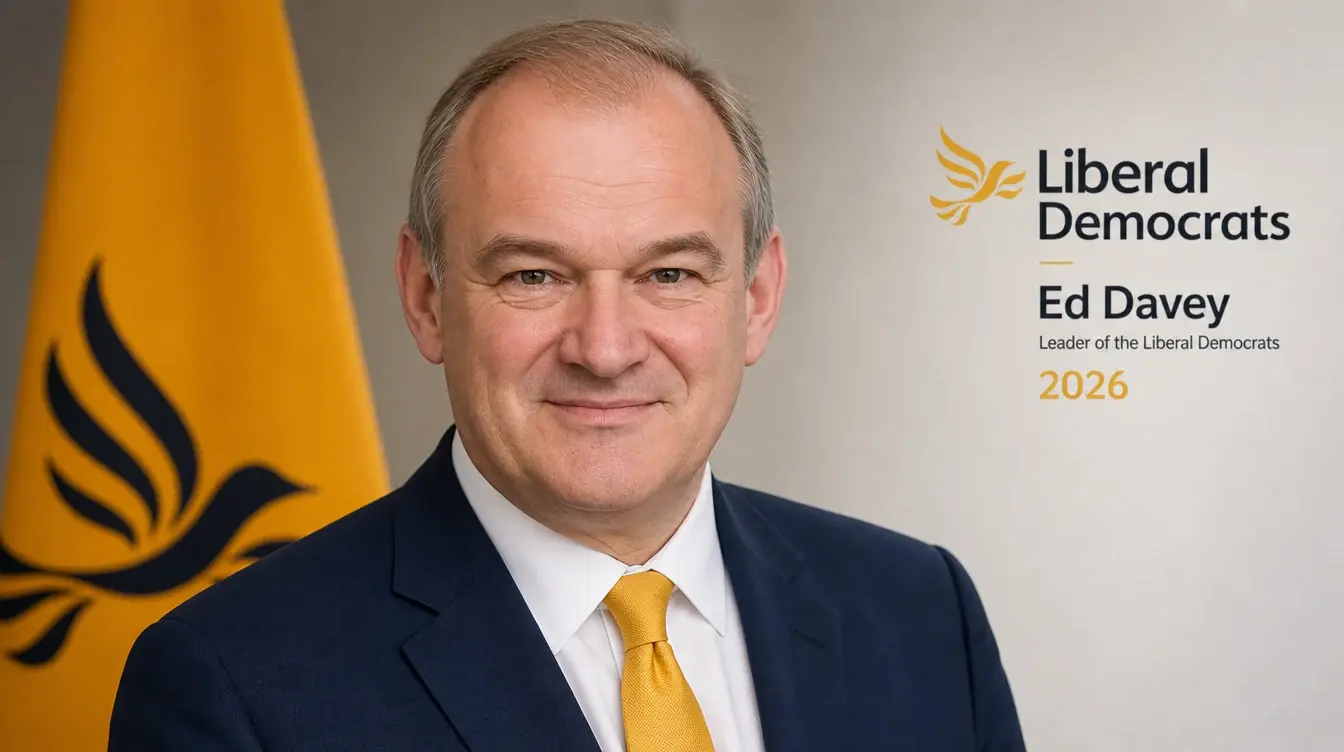
Ed Davey has led the Liberal Democrats since 2020.
Looking to 2029: What the Lib Dems Plan Next
The Liberal Democrats enter the 2029 cycle from their strongest position in a century. Davey has signalled the 2029 manifesto will focus on:
- NHS and social care: Continuing to press the NHS rescue agenda; proposing free personal care for the elderly
- Environment: Strong net-zero commitments; opposing airport expansion; promoting renewable energy
- Housing: Opposing inappropriate development in rural areas; supporting social housing; leasehold reform
- Electoral reform: Maintaining the PR referendum pledge; likely a condition of any future coalition negotiations
- EU relations: Gradually escalating the single market rejoining conversation as Brexit fatigue deepens
The party faces a structural challenge: their 72 seats are held on tactical votes that could collapse if Labour recovers. Their most important long-term project is converting tactical Lib Dem voters into genuine Lib Dem identifiers — a task that requires consistent local delivery and visible parliamentary work, not just benefiting from anti-Conservative sentiment.
For current polling data on the Lib Dems including voting intention and the leader approval tracker, see our live poll of polls. For analysis of the seats they hold and the marginal constituencies they are targeting, see our constituency tracker.
Frequently Asked Questions
What were the main Lib Dem 2024 manifesto pledges?
The 2024 Liberal Democrat manifesto “For a Fair Deal” focused on NHS reform (8,000 more GPs, a £27bn NHS rescue plan, mental health treatment within 28 days), scrapping the two-child benefit cap, restoring the Overseas Aid budget to 0.7% of GNI, a proportional representation referendum, closer EU cooperation, and protecting local services such as rural bus routes, libraries, and public toilets. The manifesto was explicitly targeted at Blue Wall Conservative-held seats rather than a national vote share campaign.
How did the Lib Dems win 72 seats with just 12% of the vote?
The Liberal Democrats concentrated all their resources on a specific type of constituency: the Blue Wall — rural and suburban southern English seats with university-educated, homeowning, pro-EU voters who had shifted against the Conservatives. By narrowing their target to ~80 constituencies and running hyper-local campaigns, they maximised their efficiency under First Past the Post. Anti-Conservative tactical voting, coordinated via social media, did the rest. The result was 72 seats from 12% of the vote — compared to Reform UK’s 5 seats from 14%.
What is the Lib Dem position on Europe and the EU?
The Lib Dems are the most explicitly pro-EU party in Westminster. The 2024 manifesto called for closer EU cooperation and single market re-entry as a long-term goal, but avoided making this the dominant campaign issue. In 2026, they support the Labour-negotiated UK–EU reset as a positive first step while calling for further integration including a veterinary agreement, youth mobility, and a route back to the single market. They lead all parties on EU-relations trust at 22%.
What is Ed Davey’s approval rating?
Ed Davey has a net approval rating of −6 in May 2026, the best of any major party leader. By comparison, Keir Starmer is at −44 and Kemi Badenoch at −15. Davey’s higher relative standing reflects both his lower profile (fewer opportunities for negative press) and genuine goodwill built during the 2024 campaign. See the full leader approval tracker.
Can the Liberal Democrats hold their Blue Wall gains in 2029?
At 13% in 2026 polling — almost identical to their 2024 result — the Liberal Democrats are on course to broadly hold their seats. MRP modelling shows they retain most Blue Wall gains as long as they remain the primary anti-Conservative alternative in those constituencies. The principal risk is a Conservative recovery above 25–26%, which would flip many of the thin-majority seats won in 2024. Several Lib Dem wins came with majorities under 3,000 votes in seats that had been safe Conservative for decades. The party’s priority is converting tactical voters into genuine Lib Dem identifiers through local delivery.
What is the Liberal Democrat position on proportional representation?
The Liberal Democrats have been the most consistent major advocate for replacing First Past the Post with a proportional voting system. Their 2024 manifesto pledged a referendum on electoral reform. The injustice of the current system is starkly illustrated by the Lib Dems’ own experience: in 2024 they won 72 seats from 12% of the vote, while Reform UK won 5 seats from 14% — a four-point disadvantage producing a 14-fold seat difference. Current polling shows 58% of the public support some form of proportional representation, though Labour and Conservative establishments oppose it as they benefit from FPTP under different circumstances.
Explore All Party Manifestos & Policies
Labour Manifesto 2024
Labour won with 33% and 412 seats. Two years in — tracking every key pledge against delivery and polling reaction.
Conservative Manifesto 2024
“Our Plan for Change” was rejected by voters. Full breakdown of what Sunak promised and why it failed.
Reform UK Policies
Reform UK’s Contract with the People: immigration, net zero, taxes, and their alternative government programme.
Lib Dems Current Polling
Current voting intention at 13%, Ed Davey approval, and the full Blue Wall voter demographic breakdown.
Electoral Reform & PR
The Lib Dems’ manifesto backed a PR referendum. 58% of UK voters agree. How FPTP hurt Reform UK and helped the Lib Dems equally.
UK–EU Relations Polling
The Lib Dems lead EU trust at 22%. 53% say Brexit was wrong. The party’s most distinctive policy differentiator.