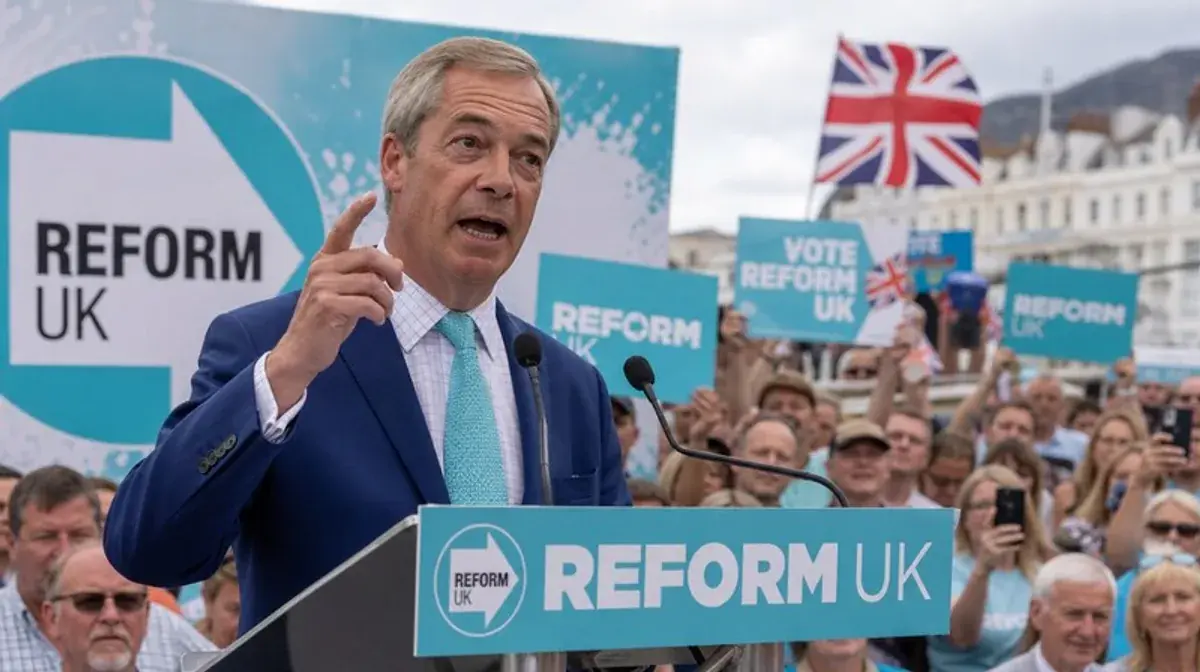
In May 2026, Nigel Farage leads his party to 28% in the polls — first place nationally — but carries a net approval rating of −15%. Ed Davey leads the Liberal Democrats to 13% in the polls — fourth place — yet is the least disliked major opposition leader at −6%. Both numbers are negative, but the gap between vote share and personal approval tells us something important about how British voters think about politics in 2026.
The Approval Ratings in Full
The May 2026 YouGov approval tracker shows the following leadership ratings. Keir Starmer: net −44% (23% approve, 67% disapprove). Nigel Farage: net −15% (35% approve, 50% disapprove). Kemi Badenoch: net −15% (32% approve, 47% disapprove). Ed Davey: net −6% (32% approve, 38% disapprove). Green co-leader Carla Denyer: net +8% (22% approve, 14% disapprove).
The striking finding: Farage, whose party leads in VI at 28%, has the same personal approval as Badenoch, whose Conservatives are third at 19%. And Davey, whose Lib Dems are at 13%, is the least disliked of the three main opposition leaders at −6%. This reflects fundamental differences in the voter coalitions and recognition profiles of each leader.
The politician approval tracker maintains monthly data for all major party leaders and key cabinet ministers. It is one of the most frequently consulted tools on this site because approval ratings often diverge from party polling in illuminating ways.
Why Farage Has a Negative Approval Rating
Nigel Farage is the most recognisable politician in Britain. YouGov's April 2026 survey found that 96% of adults could identify Farage from a description — higher than Badenoch (79%) or Davey (68%). This ubiquity is both his greatest asset and the source of his negative approval rating. Very few voters are undecided about Farage. He polarises opinion sharply: 35% approve and 50% disapprove.
The disapproval of Farage is concentrated among graduates, younger voters, and urban residents — exactly the demographic moving toward the Greens or Labour. This disapproval is intense and unlikely to soften: it is based on deep disagreement with his political positions and persona, not on unfamiliarity or uncertainty. For the 72% of the electorate that does not intend to vote Reform, Farage is actively off-putting.
For the 28% who do intend to vote Reform, Farage’s approval rating among his own voters is +78% — extraordinarily high for any political leader. This combination of intense tribal loyalty from a large base and deep repulsion from everyone else produces the statistical outcome of −15% overall while leading in the horse-race polls. Among Conservative voters, his approval sits at around −8% — a figure that will concern Kemi Badenoch, suggesting significant sympathy even among those who have not yet switched.
Why Davey Is the Least Disliked Major Leader
Ed Davey’s −6% approval reflects a very different dynamic from Farage. He is far less well-known — approximately 68% of voters say they are familiar with him, compared to 96% for Farage. Among those who know him, the split is relatively mild: 32% approve, 38% disapprove. This low-intensity profile extends across the political spectrum in a way that Farage’s ratings do not.
Davey benefits from the perception that he is a reasonable, non-threatening political figure. His antics on the campaign trail in 2024 — paddleboarding, zip-lining — generated mockery but also a kind of affection. He is not seen as a threat by people who disagree with him, which is unusual in the current political climate. His 38% disapproval is the lowest of any major party leader other than Denyer.
The challenge for the Liberal Democrats is that low disapproval does not automatically translate to voting intention. Voters who have a neutral-to-positive view of Davey often support other parties on policy grounds or do not believe the Lib Dems can win in their constituency. Approval is a necessary but not sufficient condition for vote share.
Starmer: The Outlier at −44%
Keir Starmer’s approval ratings illustrate a more severe version of the disconnect. At −44% (23% approve, 67% disapprove), he is the worst-rated sitting Prime Minister in modern UK polling history and significantly worse than any opposition leader. Yet Labour is still polling at 18% — not 23% or lower — because some Labour voters distinguish between disliking the leader and abandoning the party entirely.
The “best Prime Minister” question captures this clearly. Starmer leads at 22%, with Farage at 18% and Badenoch at 14%. A Prime Minister rated best for the job by 22% of voters while his party polls at 18% is over-performing on the personal metric. This is both a sign of his political asset and a measure of how serious Labour’s institutional problems are.
Badenoch: Tied with Farage at −15%
Kemi Badenoch’s −15% net approval ties her with Farage — a notable position given that she leads the official Opposition while he leads what was until recently a fringe party. Her cultural conservative messaging resonates strongly with Conservative party members; her approval among Conservative voters is approximately +41%. The challenge is that this strong base approval does not translate into broader cross-party credibility, which is what she needs to win back seats from Labour and hold them against Reform.
What Approval Ratings Actually Predict
Academic research on British political leadership suggests that leader approval ratings are most predictive of vote choice in the final weeks of an election campaign, when undecided voters are making their choice and tend to focus on the leaders rather than detailed policy positions. In the mid-term, approval ratings are better understood as atmospheric indicators than direct predictors of election outcomes.
The current approval landscape, with no leader in strongly positive territory and Reform leading the horse-race despite Farage’s personal negatives, suggests a political environment driven more by issue positions and anti-establishment sentiment than by traditional personal leadership appeal. The approval tracker shows these numbers monthly and will become increasingly important as 2029 approaches.