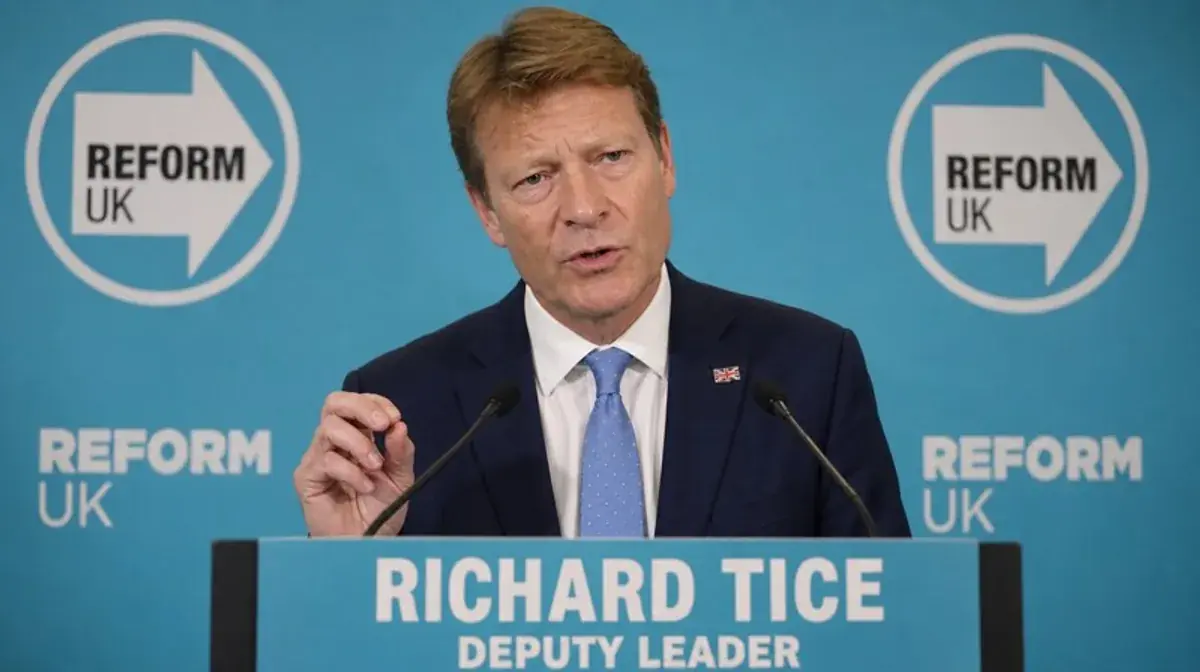
Reform UK is polling at 28% nationally and positioning itself as the insurgent voice of ordinary voters against a corrupt establishment. Its funding model — heavily dependent on a small number of wealthy donors — is a potential vulnerability that opponents have tried to exploit. Whether voters actually care is another question entirely.
Reform’s Major Donor Base
Electoral Commission records show Reform UK has relied substantially on donations from a relatively small group of high-net-worth individuals. Jeremy Hosking, a fund manager, became one of the party’s most prominent donors. Chris Harborne, a businessman with aviation interests, has been another significant contributor. The party has also benefited from the extensive personal fundraising network Nigel Farage developed over more than two decades of political activity, enabling it to raise smaller donations at scale online. When Sky News’ Trevor Phillips put Harborne’s £5 million gift directly to Reform frontman Robert Jenrick, the exchange became one of the sharpest tests yet of how the party defends its leader’s finances on air.
In the run-up to the 2024 general election, Reform raised several million pounds — substantially less than the Conservatives or Labour in the same period, but enough to run a professional national campaign. Since the election, with the party polling at record levels, fundraising has reportedly accelerated significantly, with a growing proportion coming from online small donations that mirror the model of populist parties in the United States.
How Reform Compares to the Other Parties
All major UK parties rely on concentrated funding sources that critics argue create conflicts of interest. The Labour Party receives a substantial share of its income from trade union affiliation fees and donations, which totalled around £10 million in 2023. Critics argue this creates structural dependence on union priorities, particularly on employment law and public sector pay. The unions’ collective influence over the leadership selection process adds a further dimension to this relationship.
The Conservatives have historically been the largest fundraisers in British politics, drawing heavily on the City of London, property developers, and wealthy individuals at fundraising dinners. This network partly explains the party’s record donations during the 2019 election cycle. The point for comparative purposes is that donor dependency is not unique to Reform: it is a structural feature of British party finance.
Voter Attitudes to Party Funding
Polling on party finance reveals a consistent pattern: voters in the abstract believe money corrupts politics, but in practice rarely cite funding as a decisive factor in their vote. A YouGov survey from February 2026 found that 68% of voters agreed political parties receive “too much money from vested interests,” but only 21% said they would change their vote based on revelations about a party’s donors.
For Reform voters specifically, the numbers are even more striking. Only 14% of current Reform supporters said they would reconsider their vote if they learned more about the party’s donor base. This reflects a broader pattern in populist politics: the anti-establishment narrative is strong enough to insulate the party from donor controversies that might damage a more establishment-adjacent party. Reform voters are more likely to interpret donor stories as media attacks than as legitimate scrutiny.
The Case for State Funding
The structural reliance of all major parties on concentrated private funding has renewed discussion of state funding for political parties. Around 52% of voters support some form of state funding, up from 44% in 2019, with support highest among Lib Dem and Green voters (68% and 73% respectively) and lowest among Reform voters (31%). The argument for state funding — that it would reduce the influence of wealthy donors — is understood by voters even when they do not actively campaign for it.
Labour has shown little appetite for state funding reform despite it being a longstanding Electoral Reform Society recommendation. Critics note the party benefits substantially from union money and has little financial incentive to change a system that advantages it. The Conservatives oppose state funding as a matter of principle, though their position has been complicated by years of declining membership income.
Will Donor Stories Dent Reform’s Polling?
The available evidence suggests donor controversies alone will not significantly dent Reform’s current 28% polling. The party’s brand is built on challenging the establishment, and its voters are predisposed to dismiss critical coverage as politically motivated. What could matter more is whether individual donors become associated with specific policies that alienate Reform’s working-class voter base. A 2026 BBC panel debate over Nigel Farage’s own undeclared gifts — including a £5 million personal donation and benefits from a convicted fraudster — put exactly that tension to the test in real time.
If stories emerge connecting significant donors to, for example, opposition to workers’ rights or support for privatising the NHS, the party’s cross-class coalition could face greater strain. For now, the polling evidence shows a party whose voters are enthusiastic enough to look past questions that might matter to swing voters in other parties.