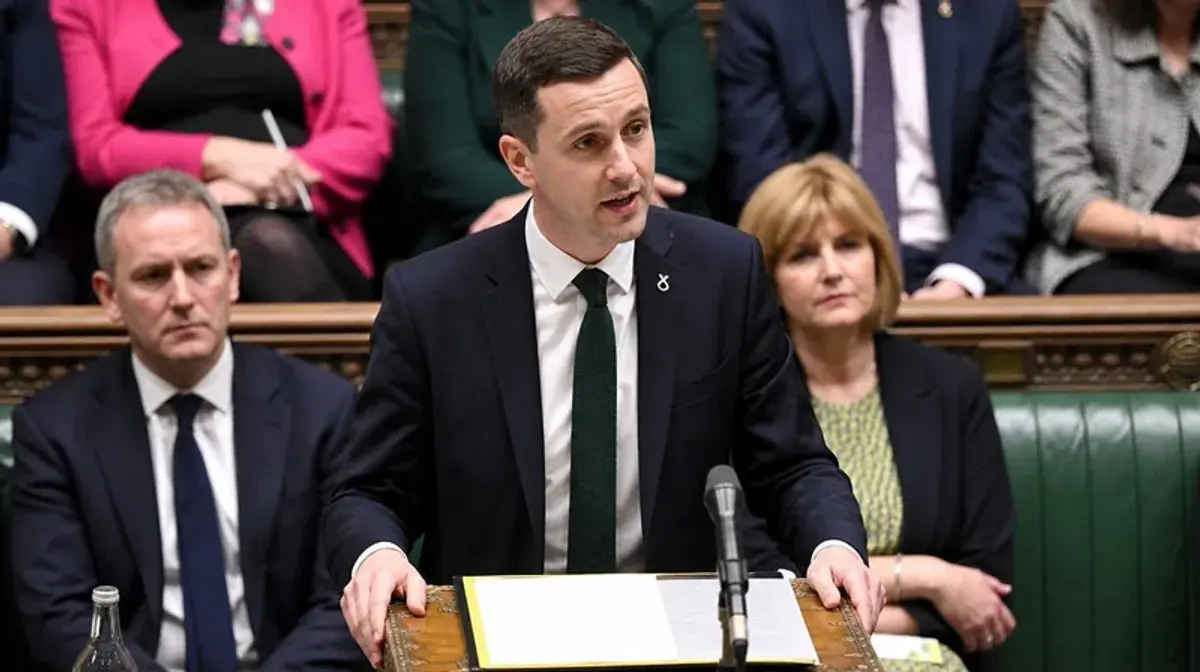
The Scottish National Party dominated Scottish politics for a decade. At the 2019 general election, it won 48% of the Scottish vote and 48 of Scotland's 59 Westminster seats. By May 2026, the party is polling at approximately 31% in Scotland — a 17-point collapse over seven years. Can the SNP survive as a major force in British politics, or is it entering a structural decline?
The Numbers: How Far the SNP Has Fallen
The SNP's Scottish polling trajectory over the past decade tells a story of peak, plateau, and decline. After the 2014 independence referendum defeat, the party surged from around 20% in Westminster polls to 50% by 2015, winning 56 of 59 Scottish seats. That peak held through 2017 and 2019, with the party consistently polling 40–50% in Scotland for Westminster. The 2024 general election began the more serious decline: the SNP fell to 30% in Scotland, losing 38 of its 48 seats, its worst Westminster result since 2010.
Since the 2024 election, Scottish polling has not stabilised. The most recent Scottish subsample from YouGov's GB tracker (May 2026) puts the SNP at 31% in Scotland — marginally higher than their 2024 result but well below the dominant position they held for a decade. Labour has recovered in Scotland to around 29%, the Conservatives hold around 16%, the Scottish Greens have grown to 12%, and Reform UK — despite having minimal Scottish organisation — is polling at 8% in Scotland, a remarkable number for a party with no Scottish MPs and limited campaigning presence north of the border.
The scale of the fall from 48% to 31% represents more than a typical mid-cycle dip. It reflects a fundamental loss of the “civic national” voter bloc that the SNP had assembled — a coalition of independence supporters, disaffected Labour voters, public sector workers, and rural communities that believed the SNP could deliver better governance for Scotland regardless of the independence question. That coalition is now fragmenting. Track Scottish independence and political polling data here.
Why the SNP Lost Support: The Governance Failures
The SNP's polling decline has several distinct causes that operated simultaneously. The first was the Nicola Sturgeon leadership crisis: Sturgeon's resignation in February 2023, the subsequent Alex Salmond inquiry controversies, and the police investigation into SNP party finances (which eventually led to the arrest of former Chief Executive Peter Murrell, Sturgeon's husband) created a sustained media narrative of sleaze and dysfunction. These events damaged the SNP's claim to be a cleaner, more competent alternative to the Westminster parties.
The second cause was governing record in Scotland. The SNP has run the Scottish Government since 2007 and is therefore judged on Scottish public services after nearly two decades. NHS Scotland waiting times have deteriorated significantly, with Audit Scotland reports documenting systemic capacity failures. Scottish educational attainment rankings have declined relative to other UK nations and OECD benchmarks. Police Scotland, created by the SNP through the controversial merger of Scotland's eight regional forces, has faced repeated operational and leadership crises. The government's handling of the Ferries saga — a spectacularly expensive failure to procure new CalMac ferries, costing the Scottish taxpayer over £600 million in overruns — became a symbol of SNP governance failure.
The third cause was the independence policy itself. After the Supreme Court ruled in 2022 that a second independence referendum could not be held without Westminster consent, the SNP's core proposition — that voting SNP would lead to a second referendum — became less credible. Without a viable independence pathway, the SNP's reason for existing as a distinct political vehicle weakens, and voters who were “SNP but not actually that bothered about independence” had less reason to maintain their allegiance. Full analysis of Scottish independence polling here.
Who Has Taken the SNP's Votes?
Scottish polling cross-tabs allow a reasonable estimate of where former SNP voters have gone. Among those who voted SNP in 2019 but no longer say they would vote SNP, the largest single group (approximately 35%) has moved to Labour. This reflects the recovery of Scottish Labour under Anas Sarwar, who has run a disciplined, competence-focused campaign positioning Labour as the party that can actually deliver change for Scotland without waiting for independence. Sarwar's personal approval ratings in Scotland are significantly better than Keir Starmer's UK-wide numbers, and he has successfully repositioned Scottish Labour as genuinely distinct from the national party on some issues.
The Scottish Greens have received approximately 20% of former SNP defectors — specifically the most strongly pro-independence voters who want to maintain a commitment to independence but have lost faith in the SNP's ability to deliver it. The Scottish Green party operates separately from the England and Wales Green party and has been able to position itself as the uncompromised independence option. Their polling at 12% in Scotland represents a doubling from 2019 levels and suggests a significant permanent realignment among young, urban, progressive Scottish independence supporters.
Approximately 15% of former SNP voters have moved to the Conservatives and around 10% to Reform UK. This may seem counter-intuitive for a party whose voters were disproportionately progressive, but it reflects the “small p” protest voter element of the SNP coalition — people who voted SNP as a rejection of the Westminster establishment and have now found a different rejection vehicle. This group is concentrated in rural and coastal Scottish communities with economic structures similar to those driving Reform support in Northern England. Track the full SNP profile and polling here.
The Holyrood vs Westminster Polling Split
An important nuance in Scottish polling is the divergence between Westminster voting intention and Holyrood voting intention. In Scottish Parliament polls, the SNP continues to poll better — typically around 36–38% on the constituency vote — than in Westminster surveys (31%). Scottish voters routinely exhibit split-ticket behaviour, giving the SNP greater support in Holyrood elections (where it forms the government) than Westminster elections (where it is in opposition). This has been a consistent pattern since devolution.
The 2026 Holyrood elections are scheduled for May 2026 (the fixed five-year cycle from the 2021 election), and these will be the most important test of the SNP's actual support in Scotland. On current polling, the SNP is expected to remain the largest party in the Scottish Parliament but potentially lose its majority, which it has held (in various coalition forms) since 2011. A coalition with the Scottish Greens would be mathematically possible but politically complicated given the breakdown of the previous SNP-Green Holyrood deal in 2023.
A minority SNP government would be structurally weaker in Holyrood, making it harder to legislate and easier for opposition parties to hold it accountable. Whether this reinforces the narrative of SNP decline or allows the party to reposition as the victim of opposition obstruction — a classic “enemies of Scotland” framing — will depend heavily on how the new SNP leadership manages the transition. Track all Scottish polling at the Scotland section.
The Path to SNP Recovery — If It Exists
For the SNP to recover to 40%+ in Scottish Westminster polling, several things would need to happen simultaneously. First, the governance scandal narrative would need to recede and be replaced by a positive track record on Scottish public services. This requires the Scottish Government to deliver visible improvements in NHS waiting times, education outcomes, and major public projects — a multi-year project with no guarantee of success. Second, the party needs a credible independence trigger that makes the “vote SNP for independence” proposition meaningful again; without a realistic route to a second referendum, the SNP's core offering is weakened.
Third — and perhaps most importantly — the SNP needs a new leader with the capacity to reunite the fractured pro-independence movement. The Alba party, the Scottish Greens, and the independence-supporting element of the Scottish left are all competing for the same voter pool. A leader who could credibly speak to all these groups would have the raw material for a recovery coalition. Whether such a figure exists within the current SNP ranks is genuinely uncertain.
The precedent for major party recovery in Scotland is not encouraging: Scottish Labour fell from 41% in 2010 to 24% in 2015 and has not fully recovered to its pre-2015 position despite years of effort and two leadership changes. However, the SNP's decline has been faster and more multi-causal than Labour's, and the party retains significant structural advantages: a large membership, an established funding base, control of the Scottish Government, and a cause (independence) that commands 47% support in the most recent Scottish poll. Those assets are not nothing — they provide a floor below which the party is unlikely to fall. Full Scottish independence tracking is here.