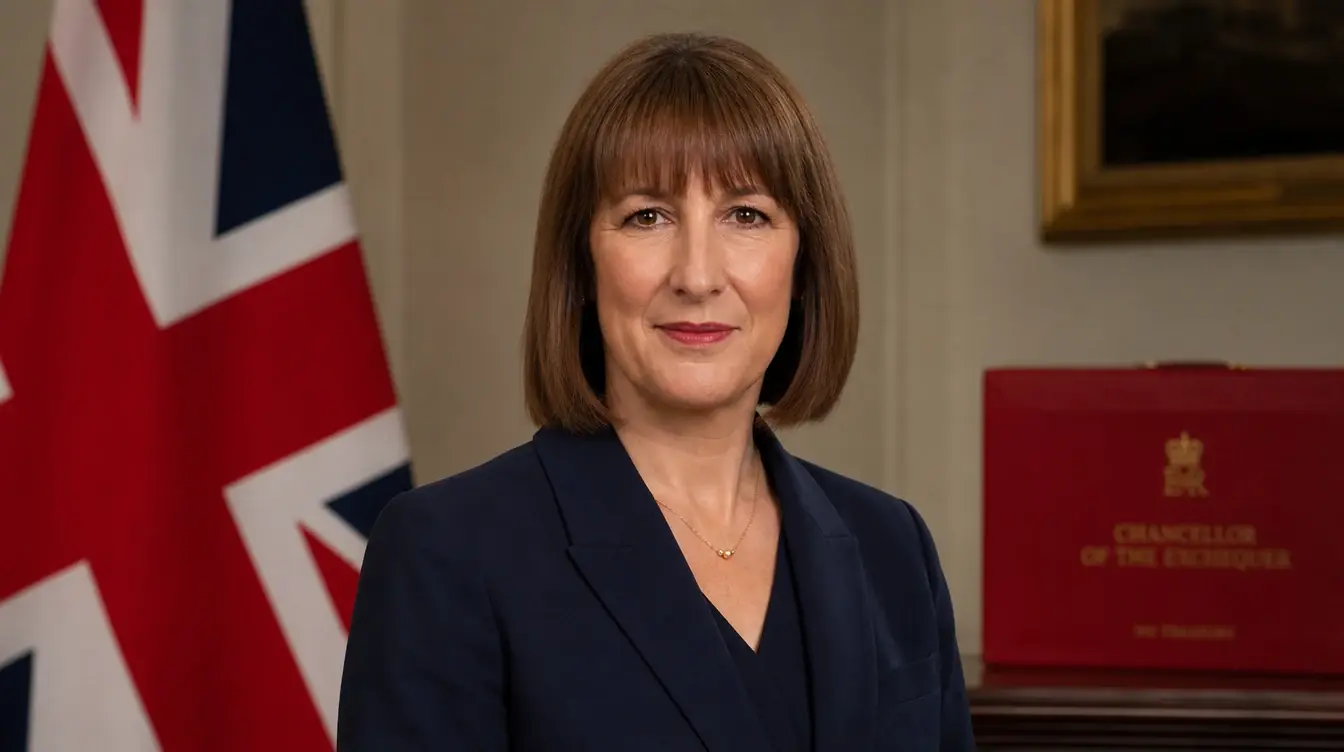
Rachel Reeves delivered the Spring Statement 2026 against a backdrop of downgraded growth forecasts, rising public sector borrowing, and a government whose polling had already collapsed to historic lows. The public's response to the statement — as captured in post-event polling — was predominantly negative, and the economic trust numbers that were already damaging for Labour deteriorated further in the weeks that followed.
The OBR Forecasts: What the Numbers Say
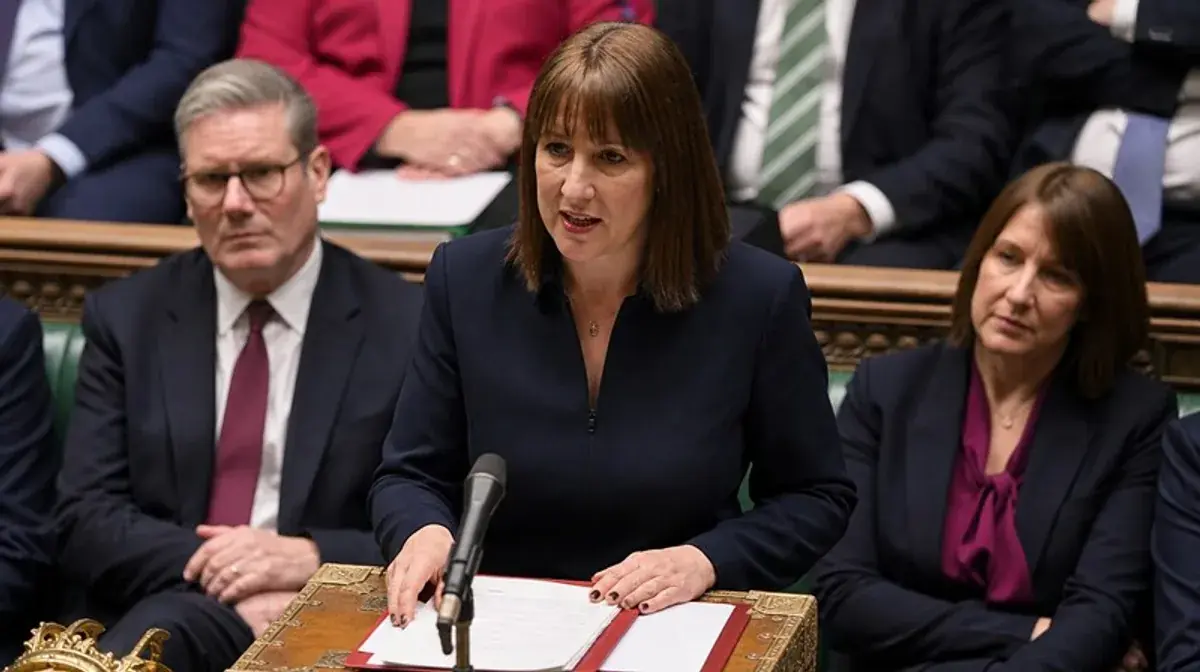
The Office for Budget Responsibility's spring 2026 forecast downgraded UK GDP growth to 1.0% for calendar year 2026, a full percentage point below the 2.0% prediction made at the October 2025 autumn budget. The downgrade was attributed to three factors: weaker-than-expected business investment following the employers' National Insurance increase from the 2024 budget, global trade headwinds from US tariff policy under the second Trump administration, and higher-than-forecast public sector pay settlements that have pushed departmental spending above budgeted levels.
The OBR also revised its debt forecast upward: public sector net debt as a percentage of GDP is now projected to remain above 100% through 2029, rather than falling below 100% by 2028 as previously projected. This eliminates the “headroom” that Reeves had cited as evidence of fiscal responsibility at the autumn budget. The revision forces either further spending cuts or a formal breach of the government's own fiscal rules — a politically fraught choice with no good options.
Reeves' response in the Spring Statement was to announce a package of departmental spending reviews that will produce further real-terms cuts to government department budgets outside of protected areas (health, defence, and schools capital). The statement did not include any new tax rises, which the Chancellor positioned as evidence of fiscal discipline. Critics, including the Greens, Labour backbenchers, and most independent economists, argued that cutting spending while growth is already below forecast will be contractionary. The debate over austerity-versus-investment remains unresolved in both economic and political terms.
Immediate Post-Statement Polling
YouGov conducted a snap poll immediately following the Spring Statement, interviewing 1,203 adults within 48 hours of the Chancellor's Commons statement. The results were damaging: 42% said the statement made them feel “less confident” about the economy, 28% said “more confident”, and 30% said no change. Among 2024 Labour voters, 34% said less confident — a significant finding given that governing party supporters typically rate their own government's economic announcements positively.
Reeves' personal performance in delivering the statement scored better than the content: 38% said she came across as “competent and in control”, 29% as “defensive and unconvincing”, and 33% had no opinion. This is broadly similar to her performance ratings at the autumn budget and suggests her presentational competence is holding even as the underlying economic picture deteriorates. Whether a Chancellor can sustain high personal ratings through continued bad economic news is questionable — the two tend to converge over time.
The most politically significant question in the snap poll was on household finances: 54% of respondents said they expected their personal financial situation to “get worse” over the next 12 months, versus 16% who said better and 30% no change. The 54% pessimism figure is the highest recorded in the UK since the 2022 cost-of-living crisis peak (56% in October 2022). A government presiding over declining household financial confidence is almost structurally unable to generate positive net approval. Track economic issue polling at issues/economy/.
Economic Trust: Labour's Most Dangerous Polling Story
Economic management trust is the polling metric that historically correlates most strongly with general election outcomes in the UK. The party leading on economic competence going into an election has won every general election since systematic tracking began in the 1980s, with the exception of 1997 when the pound's exit from the ERM in 1992 had permanently destroyed Conservative economic credibility by the time voting day arrived. The current economic trust numbers for Labour are therefore the most alarming indicator for the government's 2029 prospects.
In May 2026, 22% of GB adults say they trust Labour most on the economy. The Conservatives are on 28%, Reform UK on 15%, and “none of them” on 24%. Labour being behind the Conservatives on economic trust after 18 months in government is historically unusual — governing parties typically benefit from incumbency on economic management as they can point to actual decisions rather than hypothetical promises. The failure to gain economic credibility in government represents a fundamental strategic problem for the party.
The specific drivers of Labour's economic trust deficit, according to focus group research reported by political analysts, include: the employers' NI increase perceived as causing job losses and wage suppression; the failure to meet growth targets; the perception that public services have not improved despite tax rises; and a general sense that the government has not been honest with voters about how bad the public finances are. Each of these is a genuine governing challenge rather than a presentation problem, suggesting the trust deficit will be difficult to address without substantive policy change.
Cost of Living: The Persistent Issue
The cost of living remains the issue on which the largest number of voters rate government performance most negatively. In the May 2026 YouGov tracker, 67% of respondents say the government is handling cost of living “badly”, versus 16% who say “well” — a net score of -51%. For context, the equivalent figure for the Conservative government in October 2022 (the height of the energy price crisis) was -58%. Labour is not far from the nadir of Conservative economic unpopularity on this measure, despite having had 18 months to address the problem.
The structural problem for Labour on cost of living is that many of the forces driving high costs — energy prices, global food commodity prices, mortgage rates still elevated from the Bank of England's inflation-fighting cycle — are outside the government's direct control. The Spring Statement did not include specific cost-of-living measures (the Chancellor judged that fiscal headroom did not allow for them), which means the -51% score is unlikely to improve substantially in the near term. See polling on specific cost of living issues.
The political consequence of persistent cost-of-living pessimism is a continued shift toward parties perceived as offering change — Reform on the right and the Greens on the left. Whether Labour can address this through policy innovation or whether it is structurally constrained by fiscal rules and global economic conditions is the central governing challenge of the current Parliament. The Spring Statement 2026 did nothing to resolve the dilemma, and the polling in the weeks since confirms that the public has noticed.
The 2029 Implications: Can Growth Save Labour?
The OBR's current central forecast has UK growth accelerating to 1.8% in 2027 and 2.1% in 2028, as the effects of the NI increase cycle through and global trade conditions normalise. If this forecast proves accurate, Labour could be able to point to improving economic conditions in the run-up to the 2029 election — the traditional governing party playbook of “not taking risks with the recovery”. The challenge is that 1.8–2.1% growth by 2028 would still leave cumulative living standards lower than Labour's pre-election projections implied, making the political messaging difficult.
The scenario in which Labour recovers its economic trust is one where growth materialises, visible public service improvements are delivered (particularly in NHS waiting times), and voters conclude that the difficult decisions taken in 2024–2025 have produced sustainable improvement. The scenario in which it does not is one where growth disappoints further, borrowing constraints prevent any visible public service delivery, and the cost-of-living squeeze persists into 2028. Polling will track which scenario is materialising as we approach the next election.
For now, the Spring Statement 2026 represents a missed opportunity to shift the economic narrative. A Chancellor with more fiscal headroom could have combined spending discipline with a visible growth-oriented investment package; Reeves had neither the headroom nor the political bandwidth. The poll numbers that followed the statement confirm what the economic theory predicts: voters do not give credit for restraint, they give credit for improvement. Improvement, on current forecasts, is some way off. Full party polling and economic issue tracking at issues/economy/.
Related: Economy polling → • Cost of living polls → • Leader approvals → • VI tracker →