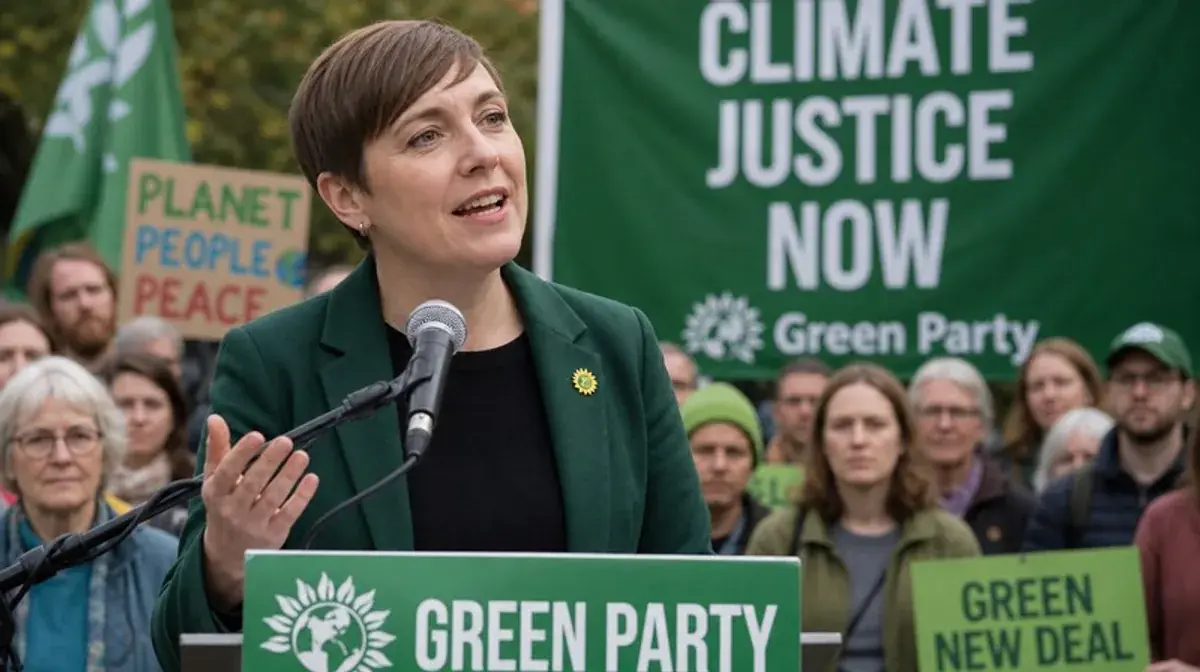
At GE2024 the Green Party of England and Wales won 6.7% of the vote and four seats, including Carla Denyer’s victory in Bristol Central. By May 2026 the party is polling at 15% — a near-doubling in vote share in less than two years. Understanding who these new Green voters are matters as much as the headline figure.
From 6.7% to 15%: The Scale of the Shift
The Greens’ 2024 result was itself a record: 1.94 million votes and four MPs. The party entered the current parliament with genuine representation and the credibility of elected legislators for the first time at scale. But the polling trajectory since has been driven by something more fundamental than individual personalities: a collapse of confidence in both Labour and the Conservatives among younger, urban, university-educated voters.
By October 2025, YouGov cross-breaks showed the Greens averaging 18% among 18-to-34-year-olds, 20% among graduates, and 22% in London. These are voters who backed Labour in 2024 but felt betrayed by spending cuts, slow climate action, and Starmer’s repositioning on welfare and immigration. The Green Party absorbed much of that disappointment.
Carla Denyer’s Role
Denyer’s profile has grown substantially since Bristol Central. As co-leader she has become the Green face on major broadcast programmes, and her debating performance in the 2024 TV leaders’ debate was widely praised. More in Common polling places her net approval at around +8% among under-45s — second only to Davey nationally.
Her positioning is deliberately radical-but-credible: strong on green industrial policy, rent controls, and taxing high incomes, but careful to avoid the internal controversies that hampered earlier Green leaderships. Unlike some predecessors, she has largely avoided internal splits on trans rights and foreign policy from dominating the party’s media coverage.
Who Are the New Green Voters?
Detailed cross-tab analysis from multiple pollsters reveals three distinct groups within the new Green 15%. The largest (roughly 40%) are Labour 2024 voters who have switched, concentrated in cities and university towns. The second group (around 30%) are 2024 non-voters who have become engaged, predominantly under 30. The third (around 20%) are former Lib Dem voters in London and other cities where the Lib Dems have little presence.
The top issues driving Green switching are climate and environment (cited by 68% of new Green voters), cost of housing (54%), NHS underfunding (48%), and dissatisfaction with the two-party system in general (62%). The Greens are benefiting from being the clearest left-of-Labour option in a political landscape where Labour has moved rightward.
The FPTP Problem
The most important caveat on the Green surge is the electoral system. Under first-past-the-post, national vote share only converts to seats where it is geographically concentrated. The Greens’ 15% is spread across many constituencies where they are second or third. MRP models suggest the party would win between 12 and 25 seats at 15% nationwide — a significant improvement on four, but far short of what proportional representation would deliver (approximately 95 seats).
The party’s strategy acknowledges this: they are investing heavily in a core of 30–40 target seats — Bristol Central, Brighton Kemptown, Norwich South, Sheffield Central, Islington North among them — where their concentrated urban vote could deliver wins under FPTP. See our detailed seat projection analysis →
Can 15% Last?
Protest-party polling surges are notoriously unstable. The Lib Dems reached 30%+ in polls in 2010 and saw it evaporate in government; UKIP polled above 15% in the mid-2010s and barely exists today. The Greens’ challenge is to institutionalise their new support into membership, local council seats, and community ties before 2029.
The May 2026 local elections provided some grounds for optimism: the party made council gains in several cities and is now the official opposition on several Labour-controlled urban councils. That local footprint is the best predictor of whether 15% in opinion polls becomes seats in the Commons. Track current voting intention →