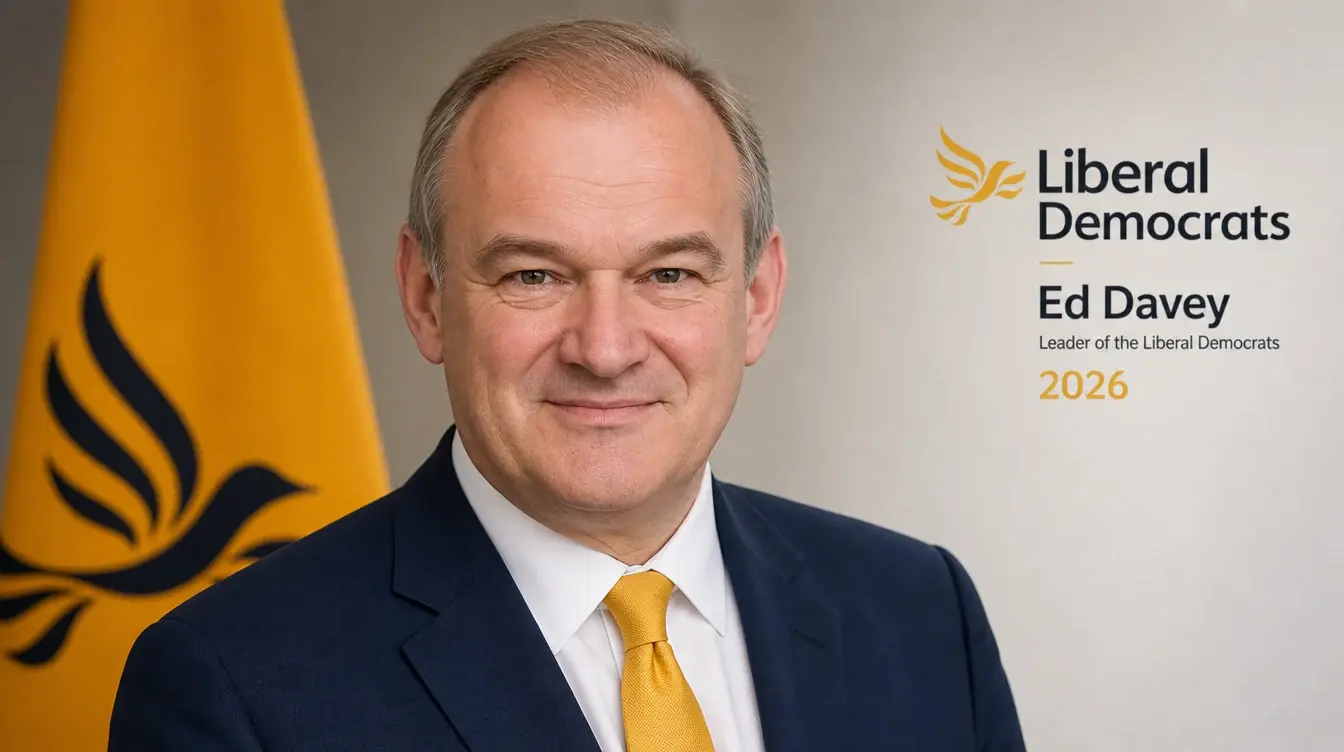
With Keir Starmer at −44%, Kemi Badenoch and Nigel Farage both at −15%, Ed Davey is the least disliked of the major party leaders at −6%. His figure is still net negative — but in a landscape defined by deep voter hostility towards the political class, having only 38% disapprove against 32% approve is a relative achievement that gives the Liberal Democrats a distinctive strategic asset.
The Numbers in Context
Net approval is calculated by subtracting the percentage of voters who disapprove of a leader from those who approve. Most UK leaders operate in deeply negative territory. Starmer’s −44% reflects a severe collapse from his position at GE2024; Badenoch’s −15% and Farage’s −15% both reflect deeply polarised voter bases. The Green co-leader Carla Denyer sits at +8%, but her lower profile means the comparison does not hold to 38% disapproval levels.
Davey’s −6% is driven by a distinctive profile. He is strongly approved by his own voters, broadly neutral among Conservatives, and his 38% disapproval is the lowest of any major party leader except Denyer. In a political era of strong polarisation, keeping disapproval low outside your core coalition is itself a strategic asset for target-seat campaigning.
The Canvassing Advantage
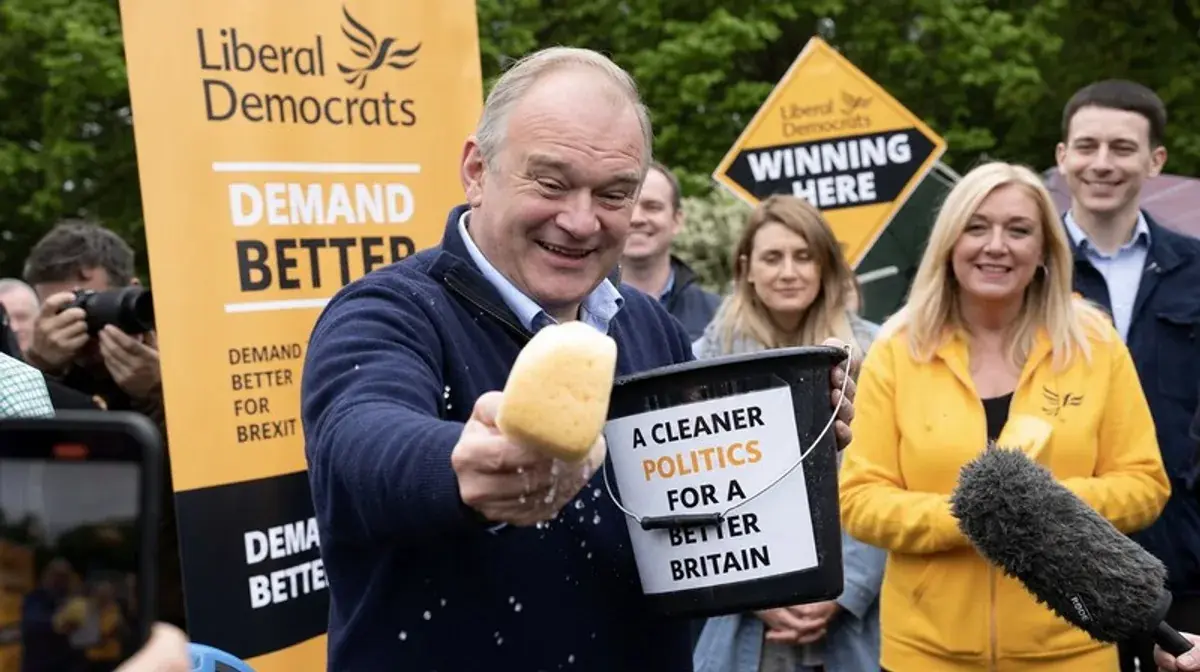
Davey’s personal approval was substantially boosted by his high-visibility campaigning style in the lead-up to the 2024 general election. His willingness to engage in stunts — paddleboarding, zip-wiring, visiting food banks in high-profile media moments — generated disproportionate earned media coverage. Critics called it shallow; polling suggested voters found it engaging rather than embarrassing.
Behind the theatrics was a serious local operation. The Lib Dems under Davey have invested heavily in target-seat campaigning, identifying former Tory voters in southern England who want a credible alternative to both Labour and Reform. The party won 72 seats in 2024, its best result since 2005, and Davey’s local credibility in those seats translates directly into his national approval figures.
Personal Story and Voter Empathy
Davey has spoken publicly and repeatedly about caring for his disabled son and previously his terminally ill mother. In a political environment where authenticity is a scarce commodity, voters across party lines consistently rate him as genuine on welfare and social care issues. More in Common polling from early 2026 found that voters who had no strong party allegiance were more likely to trust Davey on NHS and social care than any other party leader.
This gives the Lib Dems an unusual demographic opening. The party’s traditional strength among graduates, homeowners, and professional-class voters in the South West and Home Counties is now supplemented by favourable impressions among older voters worried about care costs and NHS waiting times — voters the Conservatives used to take for granted.
Lib Dem Strategy: South vs. North
The Lib Dems are deliberately not competing for the Red Wall. Their electoral strategy under Davey targets southern seats held by the Conservatives where the Labour vote is small and tactical switching can deliver wins. In constituencies like Guildford, Chichester, and Winchester, the Lib Dems are incumbents or close challengers; a nationally modest 13% vote share is geographically efficient in a way Reform’s 28% is not.
Party strategists believe Davey’s positive approval rating is a crucial asset in these seats. When local campaigns ask voters about their party leader, Lib Dem canvassers hear far fewer hesitations than their Labour or Conservative counterparts. That softens the task of persuading 2019 Tory voters who are uneasy about Farage but also disappointed with Badenoch.
Can the Lead Be Maintained to 2029?
Davey’s approval advantage is fragile in one specific way: it depends partly on low name recognition outside his target seats. Among voters who cannot name him unprompted — still a significant share of the electorate — approval ratings are neither very high nor very low. As the Lib Dems seek to grow beyond 72 seats, they will need greater national visibility, which historically comes with greater national scrutiny.
Historical precedent is mixed. Nick Clegg won a Lib Dem surge to 57 seats on high personal ratings, then saw approval collapse in coalition. Charles Kennedy was deeply liked but could not sustain the party’s 2005 heights. Davey’s challenge is to hold his −6% profile without the increased exposure that has damaged his predecessors — more visibility tends to come with more critics. See full leader approval tracker →