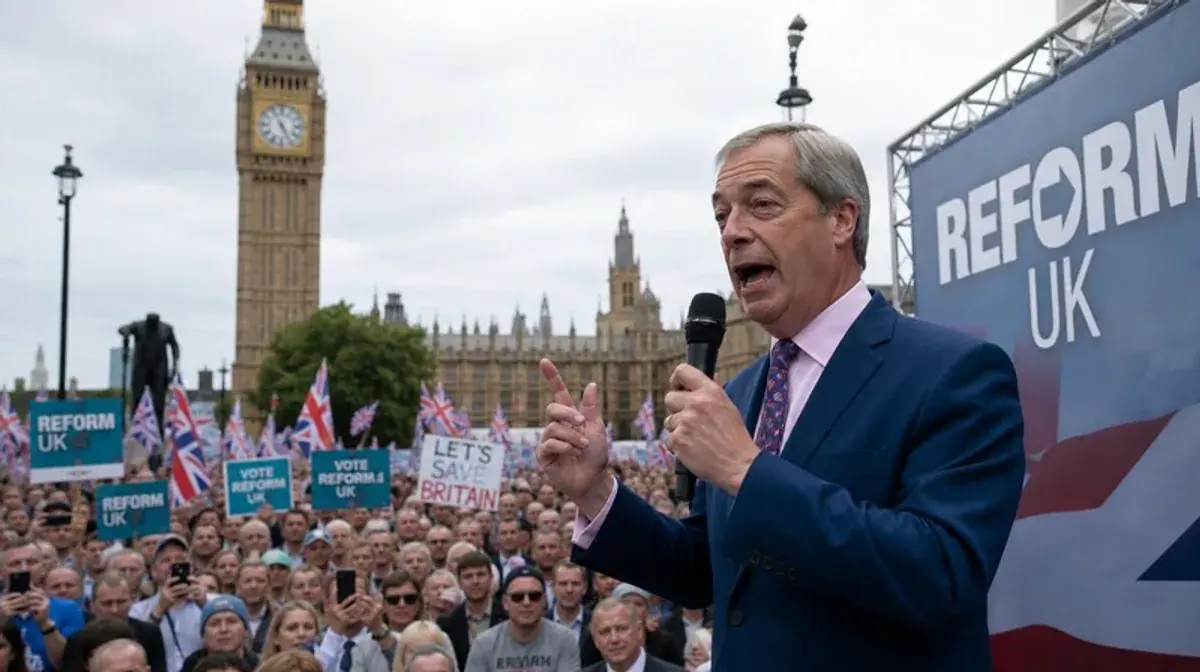
After eight attempts at Westminster, Nigel Farage finally became an MP in July 2024, winning Clacton-on-Sea with a majority of approximately 9,500. Now, with Reform UK at 28% in national polls and Farage as the party’s undisputed leader, the question of where he stands in 2029 has significant political implications.
The Clacton Result: Anatomy of a Win
Clacton is Britain’s most retirement-age constituency, with nearly 30% of its population over 65. It voted 70% Leave in 2016, the highest Leave share of any constituency. The town has suffered decades of economic decline since its seaside resort heyday, with high benefit claimant rates, low graduate population, and significant deprivation in parts of the Jaywick Sands ward. It is the prototypical Reform UK seat: white, older, non-graduate, economically left-behind, strongly nationalist.
Farage won with 46% of the vote, a remarkable share in a five-party contest. The Conservatives came second on 18%, Labour third on 16%. His personal vote — the additional support he received above what a generic Reform candidate would have polled — is estimated at 8–10 points by constituency analysts.
Constituency Polling in 2026
Constituency-level polling conducted in Clacton in early 2026 shows Reform at 52–55%, suggesting the seat is safe for the party regardless of whether Farage personally stands. The Conservatives have fallen to around 14% in the seat; Labour is at 15–17%. Farage’s personal approval in the constituency is extraordinarily high: approximately 72% of Clacton residents say he is doing a good job as their MP, with only 18% expressing disapproval.
This local popularity creates a dilemma. Clacton is safe without Farage, but it is also one of the safest possible places to guarantee his own return to parliament. Walking away from it for a less certain seat elsewhere carries electoral risk.
The Case for a Different Seat in 2029
Several strategic arguments favour Farage seeking a more prominent constituency in 2029. First, symbolic geography: a seat in the Midlands or North — the heartland of Labour’s Red Wall — would reinforce Reform’s narrative as the voice of working-class communities abandoned by both main parties. A Farage win in, say, Doncaster or Bassetlaw would carry a different message than holding Clacton.
Second, media narrative: the national press has long treated Clacton as an outlier — a coastal retirement enclave rather than representative of Britain as a whole. A win in a former mining town or Midlands industrial constituency would make the “this is just a protest vote from old people at the seaside” critique harder to sustain.
The Case for Staying in Clacton
The counter-arguments are compelling. Farage spent seven elections failing to enter parliament. He finally has a safe seat, an active local operation, and high personal approval in the constituency. Abandoning it for a riskier fight elsewhere would require him to trust that a new seat is genuinely winnable — a trust that is hard to establish without the kind of sustained local campaigning that built his Clacton position over years.
Party managers point out that Farage in parliament is more valuable than Farage as a martyr candidate who lost a marginal. Even if Reform wins 80–100 seats in 2029, having him as Leader of the Opposition or a senior Commons figure requires his personal return. Clacton guarantees that; a Red Wall seat does not.
What Farage Has Said
Farage has not publicly committed to any seat for 2029. His public comments as of spring 2026 suggest he is open to either option and that the decision will be made closer to the election. What is certain is that wherever he stands, the seat will attract national media attention and significant resources from all parties. Track current national polling →