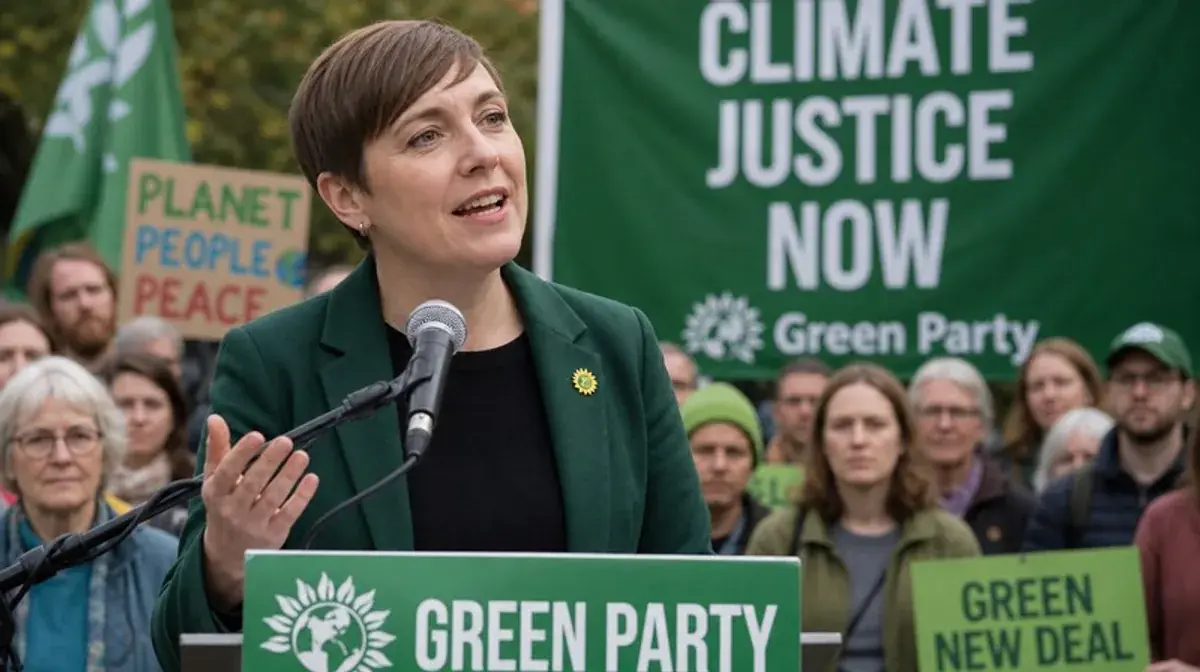
The Green Party is sitting at 15% in the May 2026 polling average — a figure that would have seemed implausible even two years ago. The party won four seats in July 2024 on 7%. Now its vote has more than doubled. The question is: who exactly is driving that number, and will they stick around?
The Demographics of the Green Surge
Detailed cross-break analysis of six major polls from March–May 2026 reveals a consistent portrait of the new Green voter. The largest group of new Green supporters — approximately 58% of those switching to the party since 2024 — are former Labour voters. They are overwhelmingly graduates, predominantly aged 25–45, and concentrated in urban areas and university towns.
The second group, accounting for about 22% of switchers, are new or renewed voters: people who did not vote in 2024 or who voted for independent candidates. This group skews younger — many are first-time voters in the 18–24 bracket — and is concentrated in the same urban graduate areas. The smallest group among Green switchers, at roughly 20%, are former Liberal Democrat voters who have moved left.
Very few new Green voters are former Conservative voters. The common assumption that the green vote draws from across the political spectrum does not hold in the current data — it is overwhelmingly a left-wing, graduate, urban phenomenon, with the highest concentrations in university cities and inner-London boroughs.
Why Gaza Changed Everything
The single most important catalyst for the Green surge among former Labour voters was the Gaza conflict. Labour’s handling of the issue — the initial reluctance to call for a ceasefire, the suspension of MPs who defied the whip — alienated a significant segment of the party’s younger, more progressive base. In post-2024 polling, 38% of current Green voters who previously voted Labour cite Gaza as a reason they switched.
This group is disproportionately British Muslim — a demographic that had historically voted Labour at around 80% but has moved sharply leftward since 2024. In several northern cities with significant Muslim populations, the Green Party is now polling ahead of Labour among under-45 Muslim voters, according to community-level surveys.
The Gaza factor also intersects with a broader sense among younger progressive voters that Labour under Starmer is too cautious and not sufficiently distinct from the political establishment. The Greens have positioned themselves explicitly as the party for voters who want bolder action on both foreign policy and domestic reform.
Climate and Housing: The Dual Engine
Climate concern alone does not explain the surge to 15%. In 2019 and 2021, the Greens polled 7–10% despite climate being a high-salience issue in those years. The surge to 15% requires additional explanation, and that explanation is housing.
The housing crisis has become a defining issue for younger voters in a way that overlaps substantially with climate concern: both are ultimately about intergenerational fairness. The Greens have developed an unusually specific and ambitious housing platform — including large-scale council house building, rent controls, and a land value tax — that resonates with renters who feel locked out of home ownership.
Among Green voters aged 25–40, housing is rated the second-most important issue after climate — and in some age groups it has overtaken climate as the primary driver of Green support. This makes the Greens’ coalition distinctly different from the stereotype of the “middle-class environmentalist” that has historically characterised commentary on green voting.
The MPs Effect: How Four Seats Changed the Party
The 2024 election gave the Greens four MPs for the first time in their history. The effect on the party’s national profile has been significant. Green MPs have delivered high-profile speeches, secured media appearances, and changed the public perception of the party from a fringe protest movement to a credible parliamentary force.
Green politicians have also been effective at social media, particularly on platforms where younger voters consume political content. Clips of Green MP speeches on NHS funding, housing, and Gaza have reached millions of views, introducing many younger voters to the party for the first time. This earned media has supplemented the Greens’ limited paid advertising budget and helped drive the polling surge.
Will the 15% Hold?
The key risk for the Greens is the “useful vote” question. As the 2029 election approaches, some Green-leaning voters may return to Labour if they believe the Greens cannot win in their constituency. This tactical voting pressure is strongest in marginal seats where Labour and Reform are closely matched.
The Greens’ best defence against tactical squeeze is to hold and build in their 2024 seats, demonstrating that Green MPs can deliver for their constituents. If they can show competent parliamentary work and local casework, the argument for tactical switching becomes weaker. The voting intention data will be watched closely for any signs that the 15% is softening as 2029 approaches.