Labour won 33.7% of the vote in July 2024 — enough for a landslide majority under FPTP. By May 2026, the party is at 18% in the polls, facing what strategists call a two-front war: haemorrhaging working-class and immigration-sceptic voters to Reform UK on the right, and progressive graduate voters to the Greens on the left. Understanding the mechanics of this squeeze is the first step to understanding whether Labour can escape it.
Mapping the Two Fronts
Analysis of vote-switching data from six major pollsters in spring 2026 quantifies the two-front squeeze. Of Labour’s 33.7% share in July 2024, approximately 7 points have moved to Reform, approximately 5 points have moved to the Greens, approximately 3 points have moved to the Liberal Democrats, and approximately 1 point has gone to other parties or non-voting. That accounts for the drop from 34% to approximately 18%.
The Reform switchers are demographically distinct from the Green switchers. Former Labour-to-Reform voters are disproportionately: male, over 45, without a degree, working-class or recently retired working-class, living in Northern England, and citing immigration and cost of living as their primary issues. Former Labour-to-Green voters are disproportionately: female or non-binary, under 45, graduate, renting in a city, and citing climate, Gaza, and housing as their primary issues.
The issues tracker shows that the two groups’ policy priorities are almost completely non-overlapping. Immigration-sceptic northern ex-Labour voters and progressive urban Green-switching ex-Labour voters do not share a single issue on which they both want the same response. This is the structural problem Labour faces: any policy move to win back one group tends to push away the other.
The Right-Front: Reform’s Labour Conquest
The erosion of Labour’s working-class northern base accelerated dramatically since GE2024. In the immediate post-election period, Labour held most of its northern seats and was still averaging 28–30% in the polls. The decisive moment was the winter fuel allowance cut in October 2024, which drove a sharp drop in Labour support among over-65 voters across all regions but most sharply in the North, where the cut hit hardest in relative economic terms.
Subsequent decisions — the October 2024 budget, particularly the employer NI rise and its impact on small and medium businesses disproportionately important in northern economies — further damaged Labour’s standing. By January 2025, Reform was ahead of Labour in every northern sub-regional poll. By April 2026, the Reform lead in Yorkshire and Humber was 17 points; in the East Midlands, 18 points.
The immigration issue compounds the picture. In northern Labour-held seats, immigration is consistently rated the most important issue in local polling. Labour’s inability to credibly promise significant reductions in net migration leaves it exposed to Reform’s simpler message. The immigration tracker shows that in constituencies where Reform leads most strongly, immigration salience is highest.
The Left Front: The Green Graduation
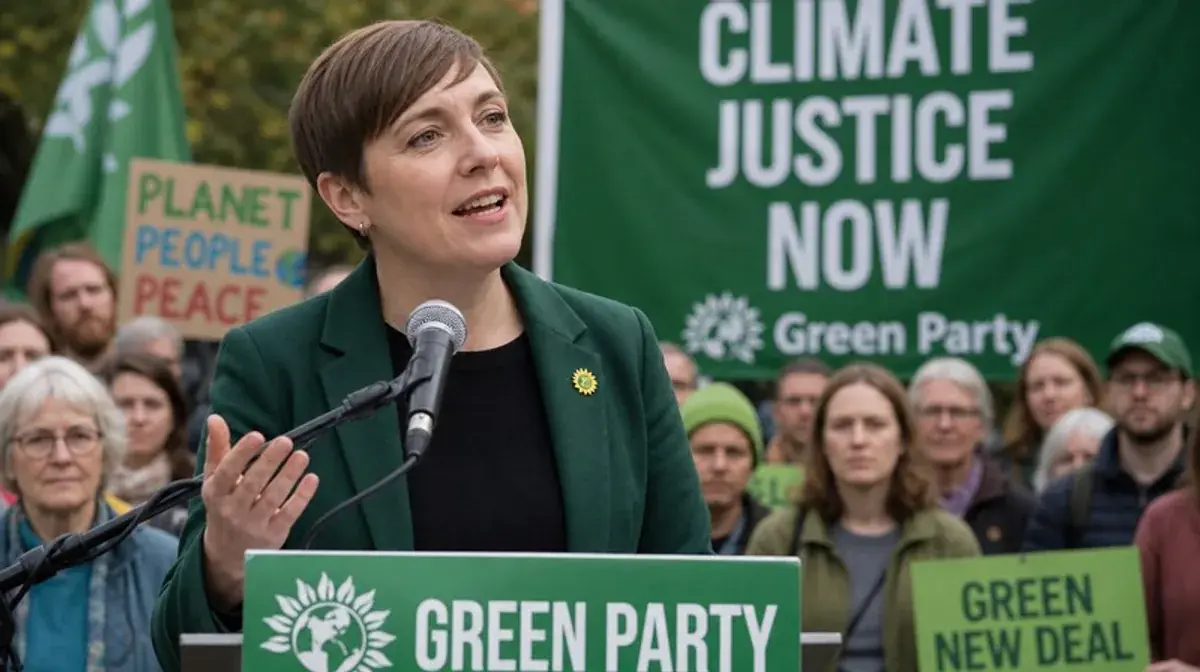
Labour’s progressive flank has been equally exposed. The Green Party’s rise from 7% at GE2024 to 15% in May 2026 has come overwhelmingly at Labour’s expense. In urban graduate constituencies — Bristol North East, Leeds North West, Manchester Central, Sheffield Central — polling sub-samples show the Greens now competitive with or ahead of Labour.
The drivers of Labour-to-Green switching are specific. Gaza is significant, particularly among younger voters and those from BAME backgrounds who feel Labour’s position on the conflict was inadequate. Climate policy is significant: the scaling-back of some Green Investment commitments in the October 2024 budget disappointed voters who had expected a transformative green agenda. And housing is significant: the government’s planning reforms have not yet delivered visible housing supply improvements in the cities where renters are most squeezed.
The tactical voting dimension complicates this. Many progressive voters who now tell pollsters they intend to vote Green are in seats where the Greens have no realistic chance of winning — and in 2029, may face a “useful vote” dilemma that returns some of them to Labour. But the longer Green polling stays high, the more the party builds local infrastructure and candidate credibility, making the return of tactical voters less certain.
Labour’s Strategic Options
Labour strategists are broadly choosing between three approaches to the two-front squeeze. The first — “hold the centre” — argues that Labour should resist moving in either direction and rely on both Reform and Green voters eventually deciding that Labour is the most viable non-Conservative option. This approach treats the current polling as mid-term noise that will correct as the election approaches.
The second approach — “shore up the right flank” — advocates a more restrictive line on immigration and a more culturally conservative tone, accepting that green progressive voters are harder to win back. This risks further Green defection but may be more electorally efficient under FPTP if Labour can hold enough northern marginals against Reform.
The third approach — “economic delivery as the universal solvent” — argues that both sets of lost voters are expressing underlying economic dissatisfaction that would respond to real improvement in living standards, NHS waiting times, and housing supply. If the economy improves visibly before 2029, some Reform voters may conclude their material situation has improved enough to return to Labour, and some Green voters may calculate that Labour is delivering enough to merit support.
The FPTP Lifeline
Labour’s single biggest structural advantage in navigating the two-front squeeze is the first-past-the-post system. With 18% of the national vote but votes efficiently concentrated in urban and suburban seats, Labour is projected to hold approximately 280 seats under current polling — still the largest party. The Greens’ 15% produces perhaps 12 seats; Reform’s 28% produces perhaps 95 seats. FPTP makes Labour’s concentrated vote worth far more than either of their dispersed rivals’ votes.
This means Labour could potentially form a government even at 25–28% in 2029, if votes remain efficiently distributed and the Greens and Lib Dems hold their urban and suburban seats against Reform. The two-front squeeze, while politically agonising, may not be as electorally fatal as it appears in raw polling terms. The MRP tracker and the vote share tracker together tell the full story.