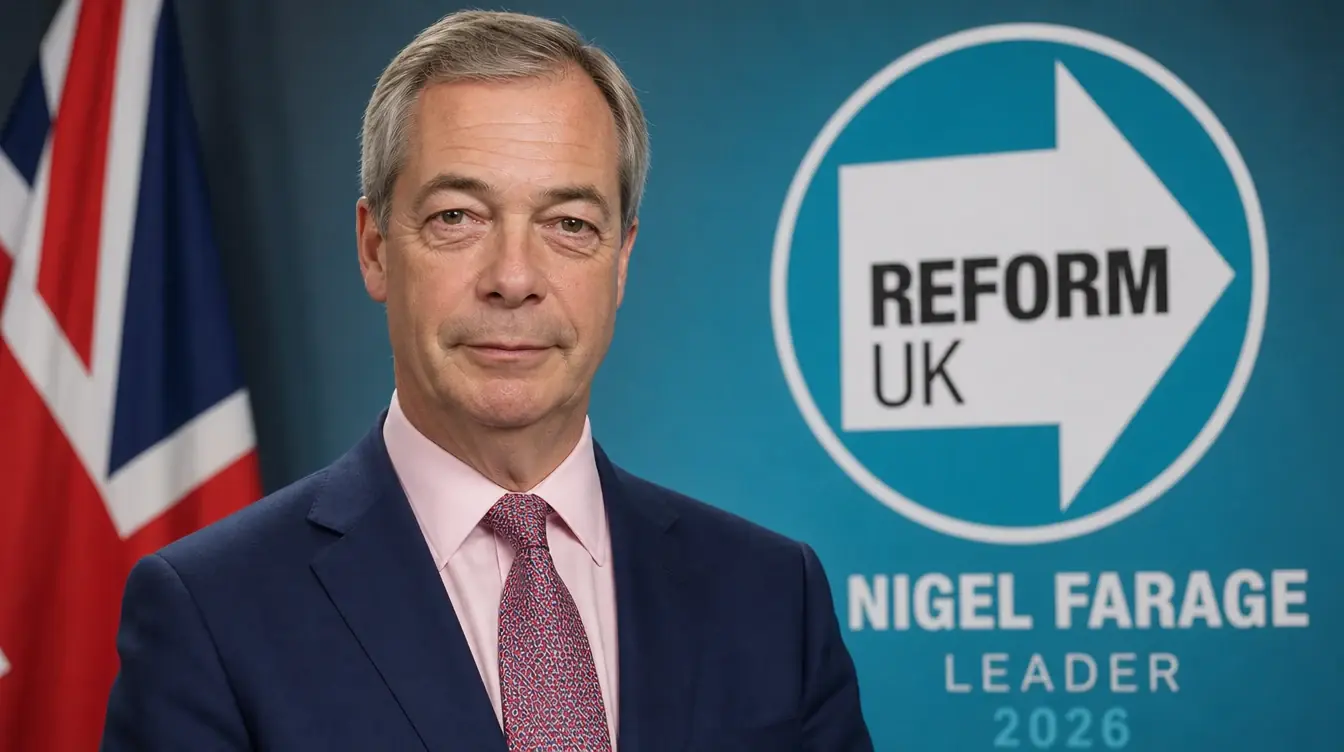
Nigel Farage’s net approval rating stands at approximately −15% in June 2026 national polling — making him significantly more popular than Prime Minister Keir Starmer (−44%) and on a par with Conservative leader Kemi Badenoch (−15%). That national figure, however, conceals one of the most extreme approval polarisations in modern British political polling: among Reform UK voters, his net approval is +78%.
The National −15%: How It Breaks Down
YouGov’s May 2026 leader approval tracker records Farage at 35% approve and 50% disapprove, yielding a net −15%. This is a significant improvement from his position in 2021 and 2022, when he registered net approval of around −35% to −40%. The trajectory reflects Reform UK’s rise: as the party has gained credibility, Farage’s overall numbers have improved modestly.
The −15% figure is pulled down most heavily by Labour voters (Farage’s net approval among Labour identifiers is approximately −65%) and Green voters (−72%). Among Conservative voters, his net approval sits at around −8% — a number that will concern Kemi Badenoch, as it suggests substantial sympathy for Farage even among those who have not yet switched to Reform.
Among Reform Voters: +78%
The +78% net approval among Reform UK voters is among the highest leader-within-party approval figures recorded for any British party leader in recent polling history. For comparison, Starmer’s approval among Labour voters is approximately +28%, and Badenoch’s among Conservative voters is around +41%. Farage’s tribal approval score is in a different category entirely.
Focus group data from Persuasion UK conducted in February 2026 offers context. Among Reform voters, Farage is described consistently as “authentic,” “says what he thinks,” and “isn’t afraid of anyone.” These descriptions map onto the core populist appeal: the anti-establishment politician who performs non-professional political authenticity. Critically, many Reform voters acknowledge concerns about specific Farage statements or associations while maintaining strong overall approval — the kind of loyalty that is resilient to negative press coverage.
Demographic Profile: Who Approves of Farage?
The demographic breakdown of Farage’s approval is revealing. His net approval is highest among men aged 50–64 (+8%), non-graduates (+2%), and voters in the East of England and East Midlands (+4% and +1% respectively). These groups overlap strongly with Reform UK’s core voter coalition: older, working-class, Leave-voting, living outside major cities.
His net approval is most negative among women aged 18–34 (−52%), London residents (−44%), and university graduates (−38%). The gender gap is particularly stark: among all men, Farage’s net approval is approximately −8%, while among all women it is approximately −31%. This 23-point gender gap is one of the widest for any British politician and has implications for Reform UK’s ceiling in seats where educated suburban women are the marginal voter.
The Recognisability Advantage
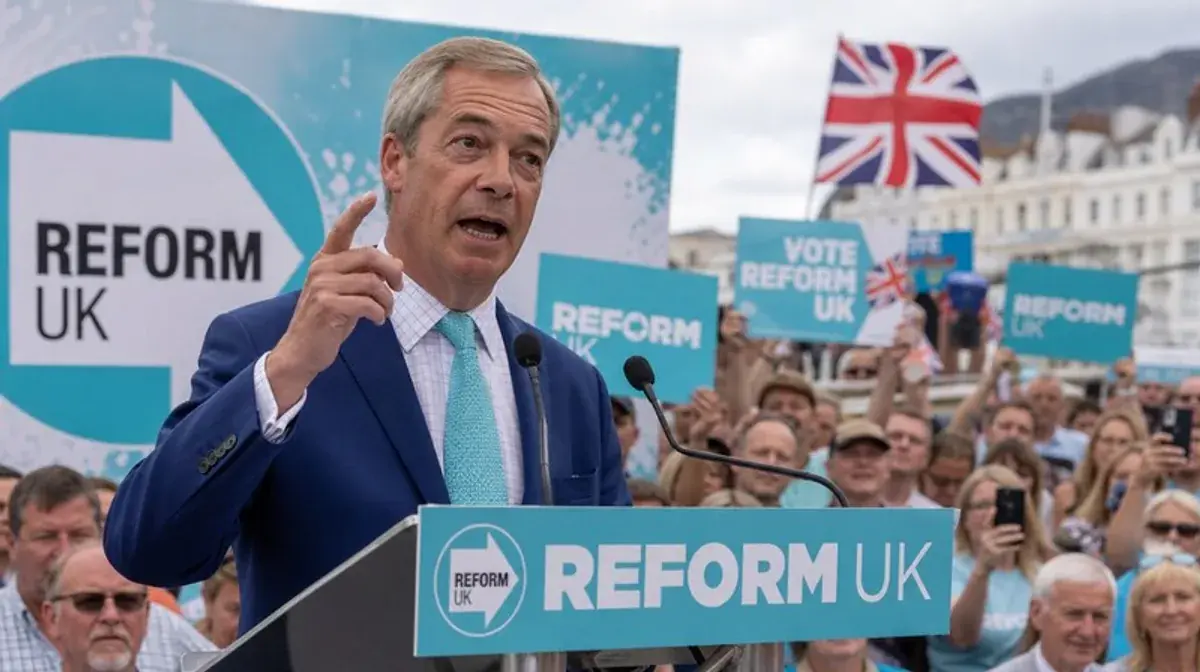
One consistently underappreciated aspect of Farage’s political position is his name recognition and media presence. YouGov’s April 2026 survey found that 96% of adults could identify Farage from a description, compared to 79% for Badenoch and 68% for Ed Davey. This asymmetric recognisability means that in media terms, Farage commands a share of voice that his party’s 28% polling support significantly understates.
Broadcast regulators count Reform UK alongside the major parties for programme balance purposes, and Farage’s individual appearances on television and radio consistently outperform equivalent appearances by other opposition politicians in terms of audience engagement metrics. For a party building from a low institutional base, this media centrality is a structural advantage that money cannot easily replicate.
Approval vs Vote Share: The Farage Effect
The relationship between Farage’s national −15% approval and Reform UK’s 28% voting intention is analytically interesting. It suggests that a meaningful number of Reform voters are selecting the party on policy grounds or economic protest rather than personal approval of Farage. Conversely, some potential Reform voters — particularly women and graduates — who share the party’s policy instincts on immigration or economics are held back by personal antipathy to the leader. This leadership ceiling effect may constrain Reform UK’s growth towards the 30–35% that would begin to threaten Labour-held seats with meaningful majorities. Full Reform UK polling data →