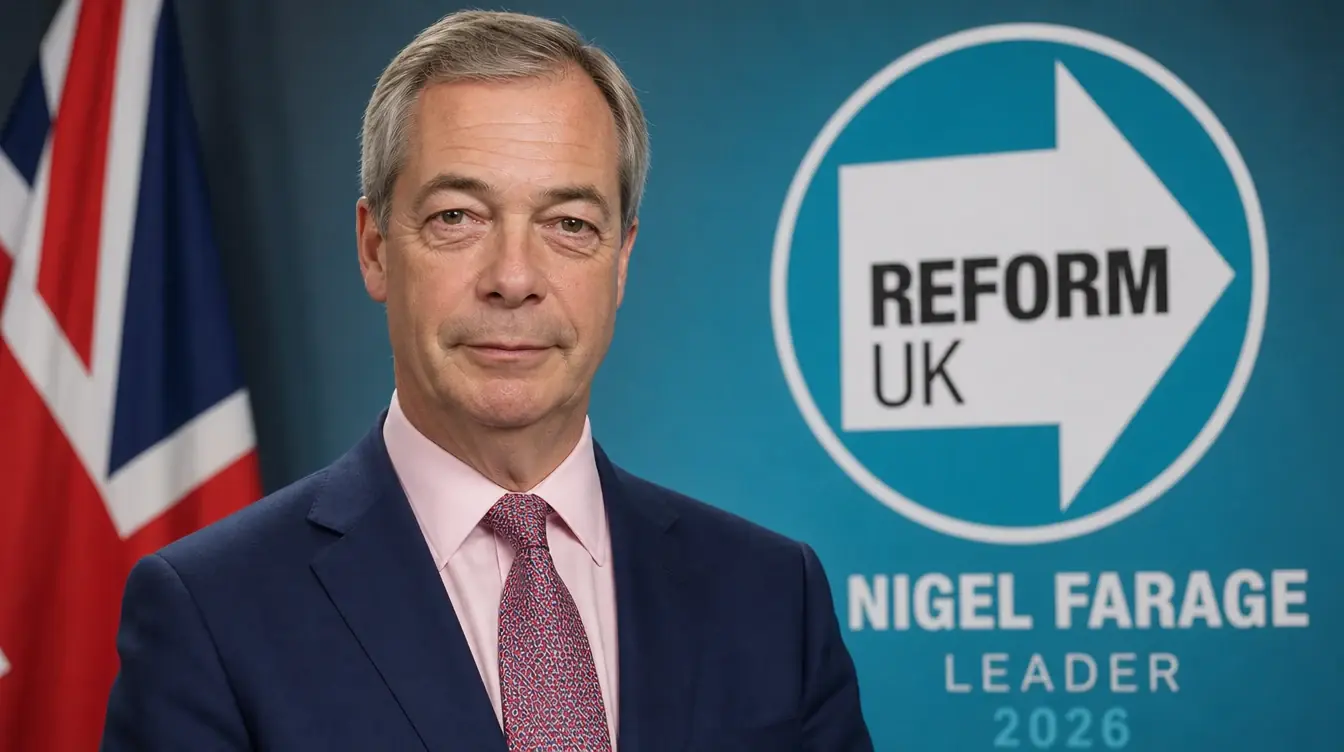
Reform UK’s 28% national poll rating is driven partly by dissatisfaction with the two main parties and partly by genuine policy alignment. But which Reform policies command genuine majority support — and which are more niche than the headline numbers suggest?
Reform’s Most Popular Policy Positions
Polling tests of specific Reform policy positions reveal the party’s strongest ground. A net migration cap of 100,000 or fewer per year is supported by 54% of voters (opposed by 28%). Cutting council spending on diversity, equity, and inclusion programmes is supported by 61%, with only 18% opposed. Reducing overseas development aid to 0.2% of GDP commands 57% support.
Abolishing the BBC licence fee in favour of a subscription model is supported by 49% (opposed by 35%) — a plurality but not a majority. Introducing English votes for English laws in parliament receives 52% support. These positions form a politically coherent populist-nationalist programme that clearly resonates beyond Reform’s core 28%.
The Contested Middle Ground
A second tier of Reform positions is more evenly divided. Leaving the European Convention on Human Rights is supported by 38% and opposed by 42%. Abolishing inheritance tax (a Reform pledge) is supported by 44% and opposed by 40%. Reducing the foreign student visa programme is supported by 48% (opposed by 31%), but this is a harder policy to brand clearly.
Significant support among Reform’s own voters does not always translate to majority support nationally. On these contested positions, framing matters: when presented as “Protecting British sovereignty by leaving the ECHR”, support rises to 45%. When presented as “Withdrawing from the international human rights treaty”, it falls to 31%.
Reform’s Vulnerable Flanks
Several Reform-adjacent positions are notably unpopular with the general electorate. Withdrawing from the Paris climate agreement is supported by only 22% of voters. The flat tax (a 20% rate across all income levels), which some Reform figures have discussed, is opposed by 58% of the general public. Even among current Reform voters, support for a flat tax is below 50%.
Policy positions that appear in Farage’s public statements but not always in formal party documents create an accountability challenge that opponents are increasingly exploiting. The 2029 campaign will bring significantly more scrutiny of these positions than either the 2024 election or current mid-term polling.
The Voters Who Back Reform but Not All Its Policies
Detailed cross-tab analysis reveals an important segment: voters who intend to vote Reform but do not agree with several of the party’s stated positions. Around 22% of current Reform supporters oppose leaving the ECHR; 31% support net-zero targets; 28% oppose cutting the international development budget. These voters are backing Reform as an anti-establishment vehicle rather than as a policy programme.
This creates a strategic tension for the party in a 2029 campaign when policies will receive more scrutiny. Reform’s ability to maintain a broad coalition will depend on keeping the focus on immigration and cost of living — its strongest terrain.
The Policy-Vote Gap
The gap between policy support and vote intention is a defining feature of the current political moment. Reform’s immigration cap policy commands 54% support but the party only polls at 28%. Conversely, Labour’s NHS investment commitment commands 58% support but the party polls at only 18%. Both figures point to the same conclusion: policy positions matter, but voter dissatisfaction with parties as institutions is a more powerful driver of current polling than any single policy. Track current voting intention →