The Scottish National Party records 3% in GB-wide voting intention polls — a figure that reflects their Scotland-only candidacy rather than actual standing north of the border. In Scotland-specific polling, the party sits at 30–32% for Westminster and 34–38% for Holyrood, suggesting a party that suffered a severe 2024 setback but has not collapsed.
Understanding the 3% Figure
GB-wide voting intention polls include all Great Britain respondents across England, Scotland, and Wales. Because the SNP only stands candidates in Scotland, which accounts for roughly 8.5% of the GB electorate, their maximum theoretical GB-wide ceiling is around 5% even if they won 60% of the Scottish vote. The 3% figure recorded in May 2026 therefore represents solid Scottish support when adjusted for the geographic constraint.
Breaking down Scotland-specific sub-samples from the major pollsters, the picture is clearer. YouGov’s Scottish cross-breaks from April and May 2026 show the SNP on 28–32% of Scottish Westminster vote intention. Survation’s dedicated Scottish polls from the same period record 31%. These numbers are down from 45% at the 2019 general election peak but represent meaningful recovery from the post-2024 nadir of approximately 26%.
The 2024 Collapse in Context
The SNP’s fall from 48 Westminster seats to 9 at the 2024 general election was dramatic but not structurally fatal. The collapse was driven by a confluence of factors: the Nicola Sturgeon resignation and subsequent investigation; internal management controversies; the broader UK swing to Labour that pulled Scottish centre-left voters; and cumulative fatigue after seventeen years of SNP government at Holyrood.
Labour’s Scottish surge — winning 37 Scottish seats in 2024 compared to just one in 2019 — was largely an anti-SNP vote rather than a pro-Labour vote. Early evidence from 2025–26 polling suggests Scottish Labour’s surge has not been sustained: by mid-2025 the party was already fading in Scottish polls as the UK Labour government’s record on the winter fuel payment and NHS generated backlash even among Scottish voters who had switched from SNP to Labour.
John Swinney: The Data on His Leadership
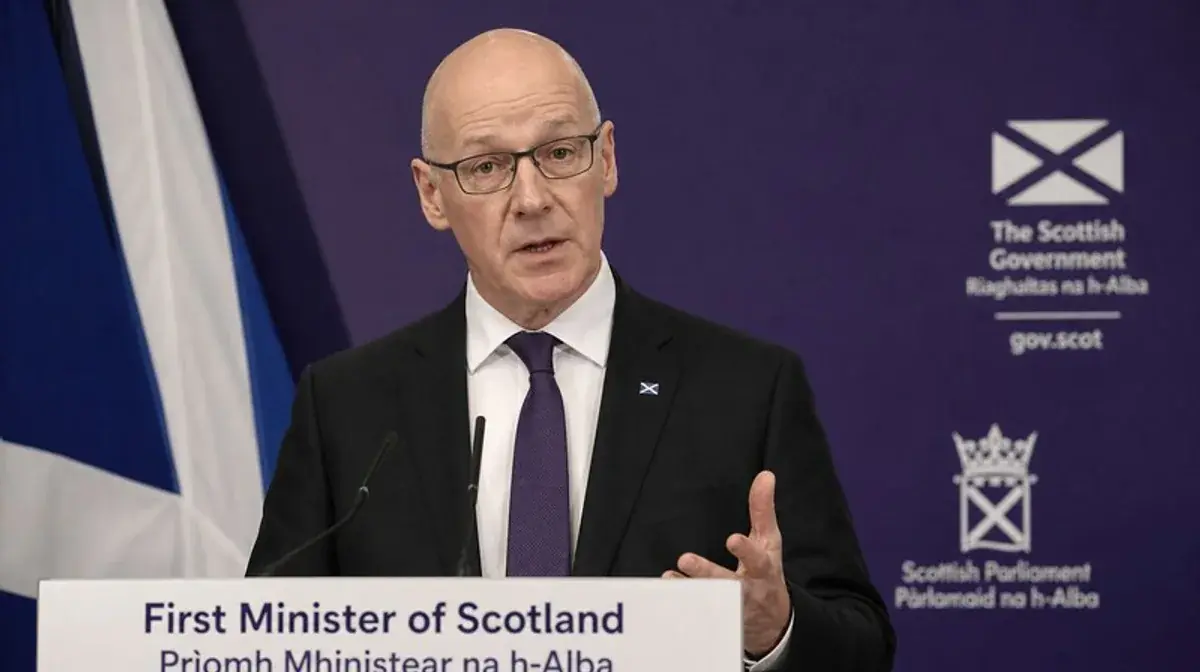
John Swinney became SNP leader and First Minister of Scotland in May 2024, inheriting a party in crisis. His approval numbers in Scotland — tracked by Survation and Panelbase — show a creditable recovery from the depths of the Sturgeon-Yousaf transition period. Swinney’s Scottish net approval sits at approximately −4% as of May 2026, compared to −18% for Scottish Labour leader Anas Sarwar in Scotland and −28% for Keir Starmer among Scottish voters specifically.
Swinney’s political positioning has focused on competent, steady administration — a deliberate contrast to the turbulence of 2023–24. His management of the Scottish budget, the NHS Scotland waiting list challenge, and the independence question — placed on a “when the time is right” footing rather than an urgent priority — has been broadly received as stable by Scottish opinion.
Holyrood: The SNP’s Real Power Base
The Holyrood election in 2026 is the key test of whether the SNP has genuinely recovered. Current polling for the Scottish Parliament constituency vote places the SNP at 34–38%, compared to Labour at 24–26%, Conservative at 16–18%, and Greens at 8–10%. Under the mixed-member proportional system used for Holyrood elections, these numbers are likely to produce another SNP government, though possibly a minority administration dependent on Green support.
The SNP’s local election performance in 2022 and subsequent by-election data confirm that the party retains a substantial activist base in Scotland. Their council presence, while reduced from the 2017 high, remains strong enough to sustain the organisational infrastructure for Holyrood and Westminster campaigns.
Recent Scottish Polls: Comparative Table
| Pollster | SNP (Scotland WM) | Labour (Scotland WM) | Con (Scotland WM) | Date |
|---|---|---|---|---|
| YouGov | 31% | 27% | 16% | May 2026 |
| Survation | 32% | 25% | 15% | Apr 2026 |
| Ipsos (Scotland) | 30% | 28% | 17% | Mar 2026 |
Independence: Stable at 45%
Scottish independence polling has remained remarkably stable at approximately 45% Yes, 55% No on a straight referendum question since 2021. The post-2024 SNP crisis did not produce a collapse in independence support. The path to a second referendum remains blocked by the UK Labour government’s refusal to grant a Section 30 order, but the underlying support base for independence is not diminishing. Full SNP polling data and party profile →