International Comparison
UK Politics in International Context
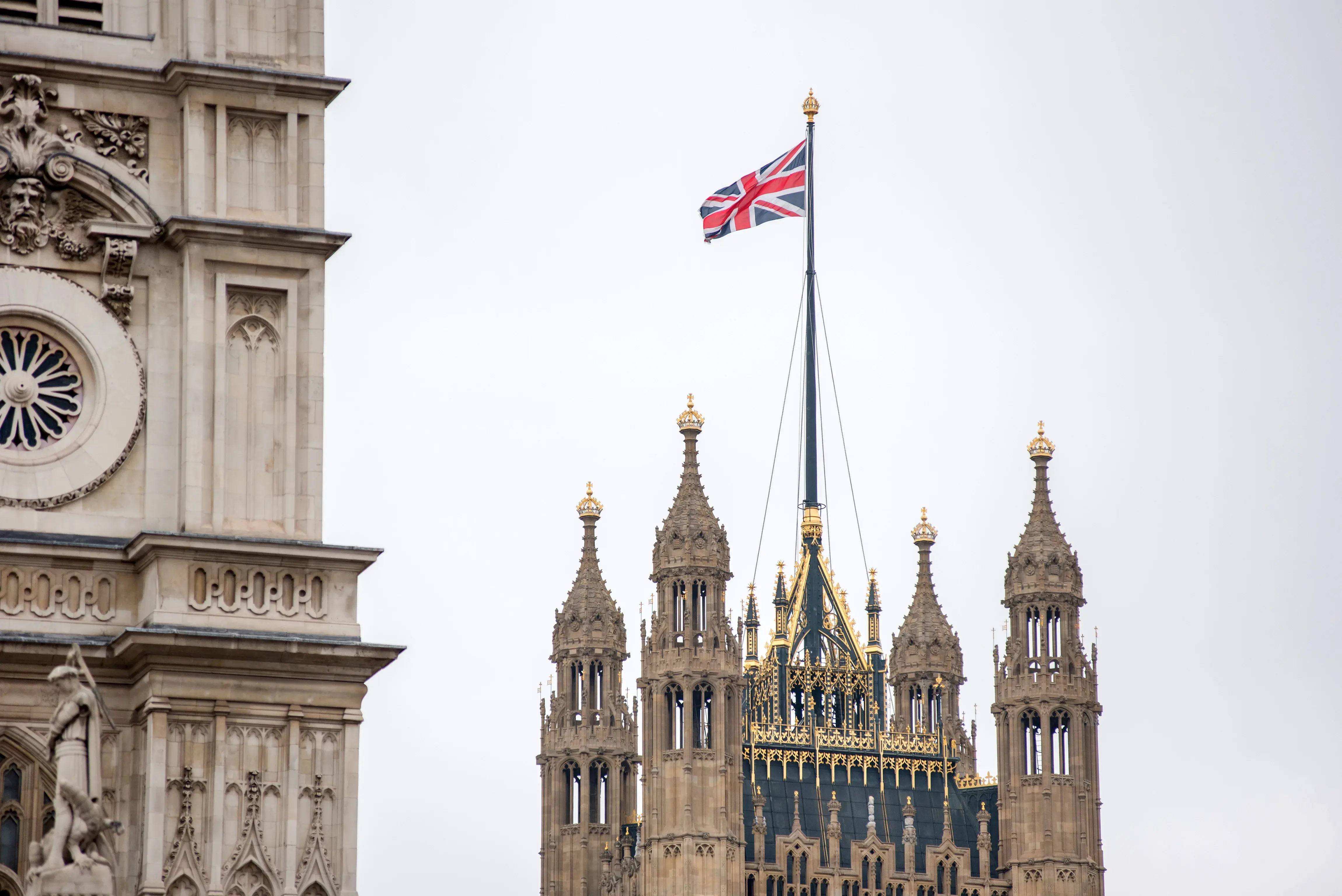
British politics in 2026 looks, at first glance, like a local story: a weakened Labour government, a Conservative party in deep structural crisis, and a surging Reform UK threatening to redraw the electoral map. But step back and the picture looks very different. The same forces reshaping Westminster are reshaping parliaments from Paris to Vienna, from Berlin to Rome. Understanding how the UK compares to other democracies is essential to understanding what is actually happening here.
The Populist Surge: UK vs Europe
Across Western Europe, right-wing populist parties have moved from the fringes to the centre of electoral competition. The question is not whether the UK is experiencing this wave, but where Reform UK sits within it — and whether the UK’s electoral system will translate populist vote share into comparable political power.
Reform UK currently polls at approximately 28% in UK voting intention surveys, making it the joint-leading or second party depending on the poll and the firm. This figure is striking, but it sits within a broader European context where equivalent parties have reached or surpassed similar levels.
Right-Wing Populist Polling Across Europe
| Country | Party | Leader | Current Polling | Electoral System | Status |
|---|---|---|---|---|---|
| United Kingdom | Reform UK | Nigel Farage | 28% | First Past the Post | Opposition (5 MPs) |
| France | Rassemblement National (RN) | Marine Le Pen / Bardella | 33% | Two-round majority | Largest opposition bloc |
| Germany | AfD | Alice Weidel | 20% | Proportional (MMP) | Opposition, cordon sanitaire |
| Austria | FPÖ | Herbert Kickl | 29% | Proportional (party list) | In government (2025) |
| Italy | Fratelli d'Italia | Giorgia Meloni | 29% | Mixed proportional | In government (PM) |
| Netherlands | PVV | Geert Wilders | 23% | Proportional (party list) | In government (2024) |
| Sweden | Sweden Democrats | Jimmie Åkesson | 21% | Proportional (party list) | Confidence and supply |
| Belgium | Vlaams Belang | Tom Van Grieken | 26% | Proportional | Largest party (cordon) |
| Spain | Vox | Santiago Abascal | 13% | Proportional (D'Hondt) | Opposition |
Sources: National polling averages, May 2026. Figures are approximate cross-firm averages.
What Makes Reform UK Different?
Reform UK’s 28% is genuinely remarkable, but understanding what it means requires comparing like with like. Several features distinguish Reform UK from its continental counterparts.
The Electoral System Distortion
Under first-past-the-post, Reform UK currently holds just 5 parliamentary seats despite polling above 25% for several months. In Germany, the AfD at 20% holds roughly 20% of Bundestag seats. In the Netherlands, PVV at 23% translates directly into 37 seats out of 150. The structural suppression of Reform UK’s vote share into seats is one of the defining features of the current UK political moment — and the central argument made by advocates of proportional representation.
At the 2024 general election, Reform UK won 4.1 million votes and 5 seats. The Lib Dems won 3.5 million votes and 72 seats. That disparity is entirely a product of how Reform UK’s vote is distributed: concentrated in areas where another party is already strong, rather than spread evenly across winnable seats.
The Brexit Factor
The UK populist right has already achieved its central policy objective. UKIP and its successor movements campaigned for decades to leave the European Union; the UK did so in 2020. This distinguishes Reform UK from parties like RN (still pressing for Frexit renegotiation) and the AfD (pressing for Dexit). Reform UK’s current platform has had to find new organising grievances: net zero, immigration, NHS reform, and elite cultural liberalism.
Reform UK vs AfD: A Closer Comparison
The AfD at 20% is the most commonly cited comparison for Reform UK in European media. But the comparison is imprecise. AfD is considerably more radical in its historical revisionism and its relationship with far-right movements; Reform UK under Farage has been careful to remain within the mainstream-right tradition. AfD’s eastern Germany concentration has no direct UK equivalent. And AfD operates under proportional representation, meaning its 20% consistently produces 20% of seats in the Bundestag.
Reform UK vs RN France: Scale and System
The Rassemblement National at 33% is the most electorally successful right-wing populist party in Western Europe by vote share. Its two-round system creates complex dynamics: in the first round, RN often leads; in second rounds, centrist and left-wing voters typically unite to block it. This “republican front” dynamic has so far prevented RN from winning a parliamentary majority despite its first-round lead. UK readers will note a parallel: tactical voting in FPTP constituencies has historically suppressed Reform UK’s seat count for similar reasons.
FPÖ Austria: What Government Looks Like
The FPÖ’s entry into government in Austria in 2025 is the most significant test case for what happens when a right-wing populist party takes power. FPÖ ran on immigration restriction, anti-net-zero policy, and opposition to EU federalism. In government, it faces the practical constraints of coalition politics. Whether FPÖ’s polling holds up under the scrutiny of governance will be closely watched by analysts of similar parties across Europe, including Reform UK.
The Common Drivers Across Europe
Academic research on the European populist surge consistently identifies a set of common drivers across different national contexts. These apply, to varying degrees, in the UK as much as elsewhere:
- Immigration anxiety: In every country where a populist right party has surged, voters who prioritise reducing immigration are massively over-represented in its voter base. YouGov cross-tabs consistently show that immigration concern is the single strongest predictor of Reform UK vote intention.
- Economic insecurity: Right-wing populist parties benefit from generalised discontent with living standards. The cost-of-living crisis that began in 2021 has not resolved; real wages remain under pressure for lower-income households across Europe.
- Distrust of mainstream parties: Across Europe, voters who trust neither the mainstream left nor the mainstream right increasingly park their vote with populist parties that position themselves as outsiders. UK Trust in Parliament polling hit historic lows after the Boris Johnson era and has not recovered.
- Cultural backlash: Gender politics, climate policy, and multiculturalism are consistent flashpoints. Reform UK’s explicit positioning on these issues mirrors the cultural conservatism of AfD, RN, and FPÖ.
Where the UK Diverges from the European Pattern
Not everything maps neatly across national borders. British electoral culture has been shaped for a century by competition between two major parties. Even as the system fragments, voter intuitions about “wasted votes” and tactical voting remain stronger in the UK than in proportional systems. Scotland and Wales add further complexity: Reform UK performs significantly below its UK average in Scotland and Wales. In Scotland, the relevant populist dynamic is independence, not immigration.
The UK also lacks an equivalent to the AfD’s eastern Germany dynamic — a region with distinctive post-reunification structural grievances that supercharge right-wing populist support. Reform UK does perform better in post-industrial English towns and coastal communities, but this geographic concentration is less extreme.
What the Comparison Tells Us About 2029
The most important lesson from the European comparison is about how electoral systems interact with populist vote shares. In proportional systems, 28% produces 28% of seats; in first-past-the-post, 28% may produce 5% or 40% depending on geographic concentration. The 2029 general election will test whether Reform UK has built the concentrated geographic presence needed to convert national polling into parliamentary representation at scale.
The Austrian and Dutch experiences also suggest that when populist right parties do enter government, the protest-vote element of their support often declines as they become accountable for governing. Whether Reform UK could manage that transition — if it ever reaches government — is an open question for a future election cycle.
Explore Further
Frequently Asked Questions
How does the Reform UK surge compare to European populist parties?
Reform UK at 28% sits within a strong European context: France’s RN at 33%, Austria’s FPÖ at 29%, Italy’s FdI at 29%, and Belgium’s Vlaams Belang at 26% are all near or above Reform UK’s vote share. Unlike most of these parties, Reform UK operates under first-past-the-post, meaning its vote share translates into far fewer parliamentary seats. At the 2024 general election it won 14% of the vote and 5 seats; under proportional representation that would be roughly 90 seats.
Which countries are experiencing the most similar political trends to the UK?
France is the closest structural comparison: its two-round majority system suppresses right-wing populist representation in a similar way to FPTP, and RN’s multi-decade journey from far-right fringe to mainstream contender mirrors Reform UK’s trajectory. Austria and the Netherlands are useful governance comparators, showing what happens when right-wing populist parties actually take office. Germany is a cautionary contrast: AfD at 20% gains proportional representation but faces a formal cordon sanitaire that Reform UK does not yet face.
Has US political polarisation influenced UK politics?
Clear parallels exist between US and UK political trends: anti-establishment party growth, collapse of centre-left parties among working-class voters, culture war issues gaining salience, and social media’s role in political communication. Nigel Farage has explicitly aligned Reform UK with the MAGA movement, visiting Trump’s Mar-a-Lago and adopting similar immigration and anti-elite messaging. However, structural differences — a multi-party system, no Electoral College, different media culture — mean the UK is not simply following a US script.
Why does first-past-the-post produce more seat distortion than proportional representation?
Under PR systems, vote share translates roughly into seat share. Under FPTP, geographic distribution of votes is decisive. Reform UK won 4.1 million votes in 2024 and received 5 seats; the Liberal Democrats won 3.5 million fewer votes and secured 72 seats. This is because Reform UK’s vote was spread across thousands of constituencies where it finished second or third — wasted under FPTP rules. FPTP rewards concentrated support in winnable constituencies; PR rewards national vote totals.
What are the common economic drivers behind the European populist surge?
Research consistently identifies the cost-of-living crisis since 2021, real wage stagnation for lower-income households, housing unaffordability among under-40 voters, and perceived unresponsiveness of mainstream parties to economic hardship. In every country experiencing a surge, voters in the lowest income brackets have significantly increased support for right-wing populist parties since 2019. Immigration concern and economic insecurity reinforce each other: voters who feel economically squeezed are more likely to attribute part of that squeeze to migration.
What vote share would Reform UK need to win a parliamentary majority?
Electoral modelling suggests Reform UK would need approximately 35–38% of the national vote for an outright FPTP majority, assuming the Conservatives remain at current polling levels. At 28%, current models project 50–100 seats — significant but far short of a majority. The Austrian FPÖ model offers an alternative: reaching government via coalition or confidence-and-supply with a depleted Conservative party in a 2029 hung parliament, requiring a lower threshold than an outright majority.